Canton of Zurich
Company formation in Zurich: Switzerland's economic capital
Register a Swiss AG or GmbH in the Canton of Zurich. 19.47% combined effective corporate tax, the country's deepest banking and engineering-talent pool, and the SIX Swiss Exchange listings ecosystem on your doorstep. We serve clients across Switzerland from our office in Zug.
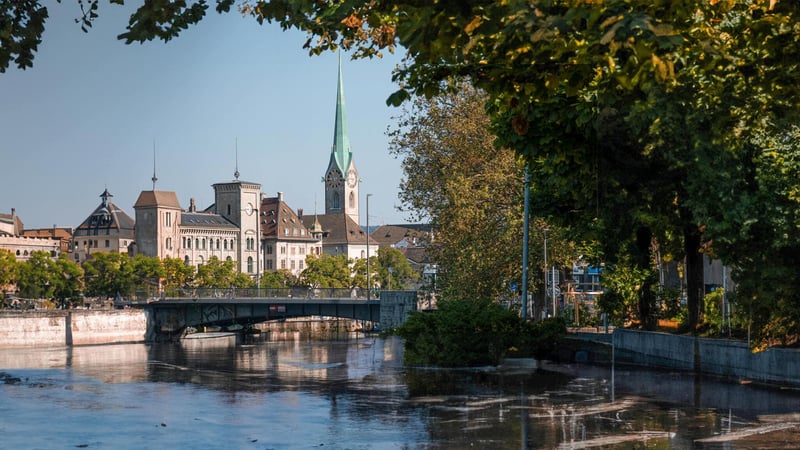
Zurich at a glance
Four numbers that define Zurich
19.47%
Combined effective CIT
CHF 100k
AG minimum share capital
CHF 20k
GmbH minimum share capital
2 – 6 weeks
End-to-end incorporation
The 19.47% rate is the combined federal, cantonal and communal charge in the city of Zurich for tax year 2026, on CHF 1 million of profit before tax, as computed by the ESTV tax calculator.
Why Zurich
Why foreign founders consider Zurich
Zurich is the Canton of Zurich, the economic capital of the Swiss confederation. It is not Zurich city alone, and it is not the insurance group of the same name. As a domicile for a new Swiss company, it pairs the country's deepest commercial infrastructure with its highest-cost base. The decision to incorporate here is almost always a decision about access: to capital, to engineering talent, and to the listings ecosystem around the SIX Swiss Exchange.
The deepest talent pool in Switzerland
ETH Zürich and the University of Zurich, together with the Technopark Zürich ecosystem, generate and retain a volume of senior engineering and research talent no other Swiss canton matches. For companies that must hire machine-learning engineers, quantitative analysts, or cryptography specialists in the low double digits within 12 months, Zurich is frequently the only realistic domicile.
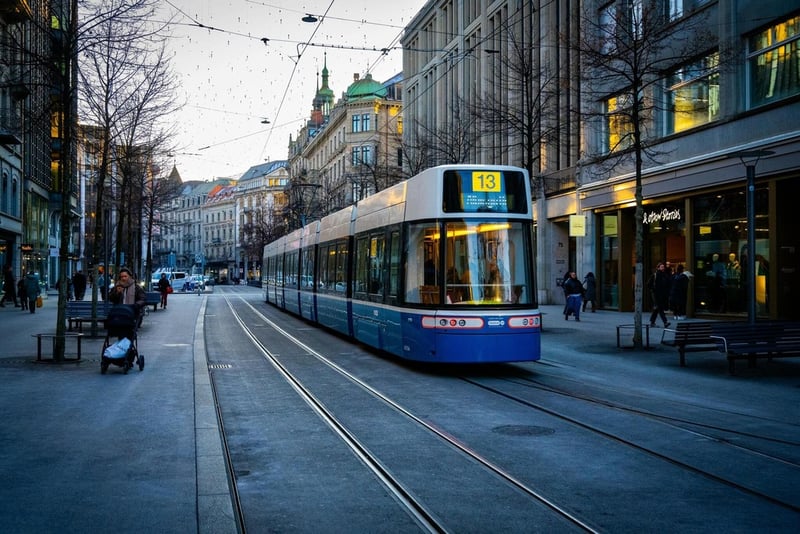
A financial and fintech hub
UBS is headquartered in Zurich, as are most of Switzerland's boutique commercial banks and a significant share of the country's asset-management firms. The SIX Swiss Exchange runs its listings infrastructure from the canton. FINMA is headquartered in Bern, but its supervisory workload and the licensed institutions it oversees are disproportionately Zurich-based, which matters for firms pursuing FINMA licence considerations under FinIA or CISA.
International airport and global connectivity
Zurich Airport is Switzerland's largest international gateway, with direct long-haul connections to North America, the Gulf, Singapore, and most European capitals. For Swiss subsidiaries of international groups whose board members commute from abroad, this is a practical operating factor that smaller low-tax cantons cannot replicate.
Fully English-capable business services
Zurich notaries, banks, tax advisors, and commercial lawyers routinely work in English, and the canton's commercial authorities accept English supporting documents in most matters. Formal Handelsregister filings and articles of association are drafted in German; English translations are prepared for internal use. For a foreign-founder SME, this removes one category of friction that still exists in French-speaking and Italian-speaking cantons.
Honest trade-off
The trade-off — Zurich is not cheap
Zurich's advantages are real, and so is its cost base. The canton is the most expensive environment in Switzerland on two compounding dimensions: corporate tax and operating cost.
Effective corporate tax: Zurich 19.47% vs Zug 11.71% vs Swiss average 14.10%
The 2026 combined effective corporate income tax rate at Zurich city is 19.47%, against 11.71% in Zug and an unweighted average of 14.10% across the 26 cantonal capitals. The 7.76 percentage-point gap between Zurich and Zug compounds annually on taxable profit. On CHF 1 million of profit, it is CHF 77,650 per year. On a ten-year horizon, at consistent profitability, the Zurich premium reaches the low seven figures. For a profit-light early-stage team, this gap is abstract; for a profitable operating company or a holding structure, it is the single largest decision variable.
Higher office rents and salaries
Office rents in Zurich's central business locations and engineering salaries at the senior level are materially higher than in Zug, Schwyz, or Lucerne. We do not publish specific CHF-per-square-metre or salary-band figures here because the authoritative Swiss sources (BFS, SECO) report them at portfolio level and the numbers move with the market. The practical point is straightforward: Zurich's price of talent and space is the second compound on top of the tax line.
Canton fit
Who Zurich suits — sector-to-canton fit
Tech and SaaS with local engineering needs
The ETH Zürich and University of Zurich talent pipeline, together with the Technopark cluster, shortens time-to-hire for senior engineering roles. Companies whose differentiator depends on resident software, data-science, or cryptography expertise find the canton's labour-market depth hard to substitute elsewhere in Switzerland.
Fintech and asset management
Proximity to SIX Swiss Exchange, UBS, and the country's densest fintech ecosystem makes Zurich the default for firms pursuing a supervised pathway. Licensed portfolio managers under FinIA, fund houses, and securities firms cluster here and in the surrounding financial belt.
International HQs of European operations
The combination of a global airport, English-capable administration, and Switzerland's double-taxation-treaty network (withholding-tax reductions on intercompany dividends) makes Zurich a natural European holding and regional-HQ base for international groups whose operating decisions need face-time with European counterparties.
Professional services and consulting
For advisory firms whose clients are Swiss banks, insurers, or listed companies, physical proximity matters more than the tax rate. Zurich's client density and the English-language working environment support a deliberate premium positioning.
Honest view
Who should not pick Zurich
Not every foreign founder should domicile in Zurich. Three profiles we routinely redirect to a different canton, with the reasons stated plainly.
Crypto and blockchain founders
Zug is the natural home. Switzerland's DLT-Act framework is federal (FMIA art. 73a), so the legal footing is equal between cantons, but the ecosystem of auditors, crypto-friendly banks, token-balance-sheet accountants, and FINMA-experienced advisers is concentrated in Zug. Zurich hosts some of the listed securities and fintech infrastructure, but for a token-issuing or DeFi-protocol entity the cost premium buys nothing. Most crypto founders pick Zug for good reasons.
Pure holding structures with no operational substance
A capital-light holding vehicle whose only activity is holding shares in operating subsidiaries has no reason to pay 19.47% when the same federal participation exemption (DBG art. 69–70) operates in Zug at 11.71%. The decision is arithmetic. Pure-holding work typically goes to Zug, and that is reflected in our practice. See Swiss holding structures for the full mechanic.
Cost-sensitive bootstrapped startups
Zurich's salary and rent premium eats runway faster than the tax line. For early-stage teams optimising for months of runway per CHF raised, Lucerne at 11.66% or Schwyz at 13.30% can preserve capital while still giving a Swiss-quality administrative environment. The talent case for Zurich only becomes dominant at the point of hiring senior engineering at scale.
Process
Forming a company in Zurich — the practical process
- 01
Choose legal form — GmbH or AG
Typical: 1–3 days
Decide between a GmbH (CHF 20,000 fully paid in; OR art. 773, 777c) or an AG (CHF 100,000 with at least CHF 50,000 or 20% paid in; OR art. 621, 632). We cover the decision matrix on the Swiss AG and GmbH service pages.
- 02
Name check via ZEFIX and draft articles
Typical: 1–7 days
Confirm the company name via the federal ZEFIX register and prepare the articles of association with a Swiss notary for review.
- 03
Notarial deed and capital deposit
Typical: 2–4 days
Open a consignment account with a Swiss bank, deposit the paid-in capital, and execute the incorporation deed before a Swiss notary. The capital is blocked until Handelsregister confirms incorporation.
- 04
Handelsregister Zürich filing
Typical: 7–21 days
File the notarised incorporation documents with Handelsregisteramt des Kantons Zürich (HR Zürich). Cantonal processing typically takes 7–21 days.
- 05
VAT, AHV and KStA-ZH registration
Typical: 5–15 days
Register for VAT with ESTV if taxable turnover is expected to exceed CHF 100,000 per year (MWSTG art. 10), register for first-pillar AHV, and open the first-filing window with Kantonales Steueramt Zürich (KStA-ZH).
- 06
Operating bank account
Typical: 5–30 days
Open an operating bank account separate from the consignment account. Swiss banks run extended CDD for foreign ultimate beneficial owners, which can extend timelines for non-EU shareholders.
Resident-signatory requirement — OR art. 718.4 / 814.3
Swiss corporate law requires at least one Swiss-resident signatory in every company, whether AG or GmbH. For an AG, a board member with sole or joint signatory authority must reside in Switzerland (OR art. 718.4). For a GmbH, a managing officer with sole or joint signatory authority must reside in Switzerland (OR art. 814.3). Canton Zurich does not tighten or relax this, and it cannot be waived. Non-resident founders satisfy it by appointing a Swiss-resident officer directly, or through a Swiss-resident director service with a licensed fiduciary. Economic control stays with the foreign owner.
End-to-end, a Swiss AG registered in Zurich typically takes 3–6 weeks and a GmbH 2–4 weeks, assuming paperwork is ready and the ultimate beneficial owner clears bank onboarding without delay. For the deeper step-by-step see start your Swiss incorporation.
Tax mechanics
Zurich cantonal taxes at a glance
Effective combined corporate tax rate: 19.47%
The headline rate is built from three layers. Federal direct tax is 8.5% of net profit after tax, which equals 7.83% of profit before federal tax, and applies identically in every canton. Canton Zurich and the municipality of Zurich-city each levy their own tranche on top, producing the combined 19.47% headline. Municipalities within the canton differ markedly: Kilchberg comes to 17.14%, Küsnacht 17.18% and Zollikon 17.38%, more than two points below the city, while Winterthur is 19.95%.
Capital tax on equity
Switzerland levies a cantonal-only capital tax on corporate equity (no federal equivalent). Rates are set by each canton on a basis-points-of-equity basis, and Zurich's rate sits in the mid-band nationally. For most foreign-founder SMEs the capital tax is a small fraction of the CIT line, but for capitalised holding structures or large paid-in-capital AGs the absolute figure becomes material. We price the exact number into the proposal based on the expected balance sheet.
VAT, withholding and stamp duty — the federal layer on top
The federal layer that applies to a Zurich-domiciled company is the same as elsewhere in Switzerland. VAT is 8.1% standard, 2.6% reduced, and 3.8% for accommodation, with a CHF 100,000 worldwide-turnover registration threshold under MWSTG art. 10. Withholding tax on outbound dividends is 35% statutory, reduced under double-taxation treaties to 0, 5, 10, or 15% depending on residence and shareholding. Issuance stamp duty is 1% with a CHF 1,000,000 lifetime exemption per company.
Double tax treaties — relevance for international groups
Switzerland operates one of the broadest double-taxation-treaty networks in Europe. For Zurich-domiciled holding structures, treaty-reduced withholding on outbound dividends is often the decisive international factor. Royalties are not subject to Swiss withholding at all, which distinguishes Switzerland from most EU states and is often the reason a European group chooses a Zurich IP-holding vehicle.
Comparison
Zurich vs Zug — an honest comparison
The question every foreign founder researching Zurich eventually asks is whether Zug would be the better choice. The answer is conditional, and it is worth stating the delta in exact terms.
Tax delta — 7.76 percentage points
Zurich at 19.47% against Zug at 11.71% is a 7.76 percentage-point gap on combined effective corporate tax. On profit of CHF 1 million, that is CHF 77,650 per year in absolute difference; on CHF 5 million, CHF 388,317 per year. The gap compounds every year the company retains profits or distributes upward to a parent. For any profit-generating structure, this is the dominant line of the comparison.
Ecosystem delta — Zurich wider, Zug specialised
Zurich's ecosystem is wider (banking, asset management, SIX, deep-tech talent, international airport), and Zug's is specialised (holding, family office, DLT and crypto, English-comfortable administration, Baarerstrasse notary and auditor cluster). The two are not competitors on the same axis. For a crypto operating vehicle, Zug wins on ecosystem gravity even before the tax arithmetic. For a senior-engineering hiring engine, Zurich wins on ecosystem gravity despite the tax premium.
Cost-of-living delta — Zurich higher
Rents, salaries, and day-to-day operating costs are materially higher in Zurich than in Zug. We do not quantify this on a public page because authoritative BFS figures move with the market cycle, but the qualitative point is consistent across every commercial study of the two cantons: Zurich is the most expensive place in Switzerland to run a company, and Zug is one of the less expensive.
When to still pick Zurich over Zug
Three situations where the Zurich premium is rational: when senior engineering hiring at scale is the critical path; when supervised-fintech proximity to FINMA licensed counterparties is operationally decisive; and when international-HQ gravity (airport, counterparty density, English) outweighs the tax line. For almost every other profile, we compare with Zug and the arithmetic favours Zug.
| Canton | Effective CIT (2026) | Delta vs Zurich | Note |
|---|---|---|---|
| Zurich | 19.47% | — | Banking, fintech, international HQs, deepest talent pool |
| Zug | 11.71% | −7.76 pp | Second-lowest rate in Switzerland, holding and DLT cluster |
| Geneva | 14.70% | −4.77 pp | Private banking, commodities, UN agencies |
| Swiss average | 14.10% | −5.37 pp | Unweighted average of the 26 cantonal capitals |
| Bern | 20.25% | +0.78 pp | Federal capital, highest combined rate nationally |
Combined effective rates in the cantonal capital, tax year 2026, on CHF 1 million of profit before tax, as computed by the ESTV tax calculator. Swiss average: unweighted mean of the 26 cantonal capitals.
Comparison
Zurich vs Geneva — when global reach matters more than cost
Tax delta: 4.77 percentage points
Zurich at 19.47% against Geneva at 14.70% is a 4.77 percentage-point gap, smaller than the Zug comparison but still material. On CHF 1 million of profit the absolute difference is CHF 47,756 per year. Geneva sits mid-table on the Swiss cantonal rate distribution and is meaningfully cheaper than Zurich without being a low-tax canton in the Zug or Schwyz sense.
Ecosystem delta — finance and tech vs private banking, commodities, and NGOs
Zurich's ecosystem is banking, asset management, listed-securities infrastructure, and deep engineering talent. Geneva's is private banking, commodity trading, and the dense cluster of international organisations and NGOs in the lakeside international quarter. A Geneva domicile is the right pick when the counterparty network sits on Quai Gustave-Ador rather than Paradeplatz; a Zurich domicile is the right pick when the counterparty network runs through SIX, UBS, and the surrounding institutional banking fabric.
Foreign founders
Permits and residency for foreign founders setting up in Zurich
Owning a Zurich company does not, by itself, grant the owner the right to live or work in Switzerland. The two questions — domiciling a company and obtaining a residence or work permit — are solved separately under federal immigration law. For depth on the permit mechanics see our work permit page.
Migrationsamt des Kantons Zürich — the authority you deal with
All permit applications for individuals living or working in Canton Zurich are processed through the Migrationsamt des Kantons Zürich, in coordination with the federal State Secretariat for Migration (SEM) where quota allocation applies. Zurich holds the largest cantonal share of the federal third-country quota, which in practice means clear processes and predictable timelines rather than faster ones.
EU/EFTA nationals — free movement, registration only
Nationals of EU and EFTA states operate under the Agreement on the Free Movement of Persons (FZA / AFMP). No work permit is required to work or open a business. A registration with the Zurich cantonal authority is required for stays above three months. In practice the permit side is a formality for EU/EFTA founders.
Non-EU founders — B/C/L permits and the quota reality
Third-country nationals fall under the federal quota system. For 2026 the Federal Council has set the third-country quota at 4,500 B permits and 4,000 L permits (VZAE Annexes 1 and 2). Zurich's cantonal share is 249 B and 399 L permits, the largest of any canton, and a further 3,250 B and 2,000 L permits sit in a federal reserve; cases are scoped to "economic interest to Switzerland" under FNA art. 19 with SEM coordination. The realistic end-to-end timeline for a non-EU founder seeking a B-permit linked to a new Swiss company is three to six months. Short-term L-permits (up to 12 months) are a faster route when the business model supports it.
Ongoing compliance
What a Zurich-based company must do each year
A Zurich domicile carries the same federal ongoing obligations as any Swiss company, plus the cantonal filings specific to KStA-ZH. The practical compliance calendar, in order of cadence, looks like this.
Annual financial statements and audit
Every Swiss company prepares annual financial statements under the Swiss Code of Obligations. Ordinary audit is triggered only when a company exceeds two of the three statutory thresholds for two consecutive years: balance-sheet total CHF 20 million, revenue CHF 40 million, or 250 FTEs (OR art. 727). Most foreign-founder SMEs fall below these and operate on limited review, or opt out entirely when they have ten or fewer FTEs.
KStA-ZH corporate tax filing
The annual cantonal corporate tax return is filed with Kantonales Steueramt Zürich (KStA-ZH). The schedule follows the canton's standard calendar with extension options on request. Zurich's filing system is fully digital for commercial taxpayers and English-language correspondence is accepted on most routine matters.
VAT returns — quarterly or annual
VAT returns are filed with the federal ESTV (not cantonally). The default cadence is quarterly; annual returns are available for companies below certain thresholds and on prior approval. VAT registration is required when taxable worldwide turnover exceeds CHF 100,000 per year (MWSTG art. 10).
AHV and occupational-pension registration for employees
As soon as the company employs staff in Switzerland, registration for first-pillar AHV and for mandatory second-pillar BVG occupational pension becomes compulsory. Zurich hosts a dense market of BVG providers, which makes plan-selection easier than in smaller cantons. Administrative handling typically sits with the company's accounting function — see ongoing accounting and bookkeeping for the continuity service.
FAQ
Frequently asked questions — company formation in Zurich
What's Zurich's effective corporate tax rate in 2026?
The combined effective corporate income tax rate in Zurich city, federal plus cantonal plus municipal layers combined, is 19.47% for tax year 2026. The federal direct tax alone is 8.5% of profit after tax, which equals 7.83% of profit before federal tax. Municipalities differ markedly: Kilchberg (17.14%), Küsnacht (17.18%) and Zollikon (17.38%) on the lake sit more than two points below the city, while Winterthur comes to 19.95%.
Why is Zurich more expensive than Zug for incorporation?
Zurich's combined rate is 19.47% against Zug's 11.71%, a 7.76 percentage-point gap that compounds on profit every year. On CHF 1 million of profit before tax the absolute difference is CHF 77,650 per year. Zurich also carries materially higher office rents and salary benchmarks than Zug, which adds to the operating cost delta beyond the tax line.
Is Zurich worth it for a tech startup despite the tax premium?
Often yes. The engineering-talent density around ETH Zürich, the University of Zurich, and the Technopark ecosystem shortens time-to-hire for senior roles, and deep customer proximity to Zurich-headquartered banks and insurers is hard to replicate elsewhere. Cost-sensitive bootstrapped teams may prefer Lucerne at 11.66% or Schwyz at 13.30% instead.
How long does company registration take in Zurich?
A GmbH typically takes 2–4 weeks end-to-end and an AG 3–6 weeks end-to-end. Processing at the Handelsregisteramt des Kantons Zürich typically takes 7–21 days once the notarised file is submitted. Timelines compress when the bank consignment account and notarial deed are prepared in parallel.
Do I need to live in Zurich or in Switzerland to form a company there?
No for ownership, partial yes for signing authority. Any nationality may own a Swiss GmbH or AG. At least one managing officer (GmbH) or board representative (AG) must be domiciled in Switzerland, under OR arts 814.3 and 718.4. Non-resident founders commonly satisfy this by appointing a Swiss-resident officer or using a nominee-director arrangement with a licensed fiduciary.
Which banks are best for a Zurich-based company?
Zurich hosts the majority of Switzerland's large and boutique commercial banks, so the choice is wider than in any other canton. Account-opening mechanics, KYC expectations, minimum deposits, and UBO review vary by institution and by UBO nationality; we do not endorse a single bank on a public page because the right partner depends on the structure.
Is Zurich English-friendly for running a business?
Yes. Notaries, banks, tax advisors, commercial lawyers, and FINMA correspondence routinely operate in English. Formal Handelsregister filings and articles of association are usually drafted in German with English translations for internal use, and Zurich-canton authorities accept English supporting documents in most commercial matters.
How does Zurich's tax compare to Zug and Geneva?
Zurich sits at 19.47%, Zug at 11.71%, and Geneva at 14.70%: combined effective corporate income tax rates for tax year 2026. Zug wins on headline rate, Geneva sits mid-table with a distinct sector fit (private banking, commodity trading, international organisations), and Zurich's premium buys talent density and international airport connectivity. The unweighted average of the 26 cantonal capitals is 14.10%.
Can I move my Zurich company to Zug later?
Yes. A seat change within Switzerland is a registered amendment to the articles of association, filed with the new cantonal Handelsregister. It is administratively straightforward, but continuity of VAT registration, employment contracts, and banking relationships must be managed so that no unintended tax or compliance events are triggered.
Why do fintechs still pick Zurich despite the higher tax?
Supervisory proximity to FINMA processes, correspondent-banking access through Zurich-headquartered institutions, the SIX Swiss Exchange listings ecosystem, and the densest fintech-talent pool in Switzerland. For certain licensed activities these factors frequently outweigh the tax premium, which is why Zurich remains Switzerland's default for banking, asset management, and supervised fintech.
Talk to us
Ready to incorporate in Zurich?
What to expect after you contact us
- A 30-minute discovery call in English. Canton, legal form, timeline, substance, residency, licensing — we cover the lot.
- A written requirements brief recapping what we heard, what we recommend, and what is still open.
- A custom written proposal with scope, assumptions, and a fee band. Standard formations carry our published fixed fees (GmbH CHF 990, AG CHF 1,490); structures with holding layers, licences or several entities get a scoped proposal.
Prefer to browse first? See the all Swiss cantons we cover before booking a call, or compare Zurich directly against compare with Zug if you are weighing the tax delta.
Our office
Baarerstrasse 14, 6300 Zug
Serving clients across Switzerland, including Zurich-domiciled structures, from our office in Zug. Zurich city is 25 minutes by direct train from Zug.
Monday to Friday, 09:00–18:00 CET. Meetings by appointment.
Base your business in Zurich
The deepest banking, asset-management and engineering-talent ecosystem in Switzerland, at a 19.47% combined effective corporate tax rate. We scope the work from our Zug office and deliver across the Canton of Zurich.