Service · GmbH formation
Form a Swiss GmbH — the lean limited-liability company for foreign founders
The Swiss GmbH (Gesellschaft mit beschränkter Haftung, Sàrl in the French-speaking cantons) is Switzerland's lighter incorporated vehicle: CHF 20,000 capital fully paid in at formation, one Swiss-resident signatory, public partner register, and a 2 to 4 week end-to-end timeline. We handle the full incorporation for foreign founders from our office at Baarerstrasse 14 in Zug.
Swiss GmbH at a glance
The three numbers that matter for a GmbH
CHF 20k
Minimum capital, fully paid-in
2 – 4 weeks
End-to-end formation timeline
1
Swiss-resident signatory required
Who typically chooses a GmbH
- Owner-operator founders with CHF 20k to low-seven-figure revenue.
- One to five partners who run the business themselves.
- Foreign entrepreneurs opening their first Swiss entity.
- Small holding vehicles where public partner disclosure is acceptable.
When a GmbH is the wrong fit
- Planned capital raise or IPO — use an AG (Aktiengesellschaft) for share-class flexibility and private shareholders.
- Many passive investors who want their names off the public register.
- Foreign parent wanting a Swiss arm without a new legal personality — a branch office (Zweigniederlassung) is the right answer instead.
Definition
What a Swiss GmbH is (in plain English)
A Swiss GmbH is a body corporate with separate legal personality and limited liability, sitting in the middle of the Swiss legal-entity ladder between a sole proprietorship and an AG. Its share capital is divided into quotas held by named partners. The GmbH is governed by the Swiss Code of Obligations (OR), Book 3, Title 28, articles 772 to 827. It acquires legal existence at the moment the cantonal Handelsregister publishes the incorporation entry, and it is dissolved only by statutory procedure. The French-language synonym in the cantons of Geneva, Vaud, Neuchâtel, Jura and Fribourg is Sàrl (Société à responsabilité limitée); in Ticino it is Sagl.
LLC, Sàrl, GmbH — is it all the same thing?
For a US or UK founder searching Switzerland LLC: the Swiss GmbH is the functional counterpart of a US LLC or a UK Ltd, but the tax mechanics differ. A Swiss GmbH is always a separate corporate taxpayer: it pays Swiss corporate income tax on its profit, and dividends distributed to partners are subject to 35% Swiss withholding tax before any treaty relief. A US LLC is by default a pass-through for US federal tax. So the legal concept lines up; the tax treatment does not. Most US founders coming into a Swiss GmbH therefore need tax advice on the US side as well.
GmbH in Switzerland vs Germany, Austria and Liechtenstein
The German GmbH has a minimum capital of EUR 25,000 and the Austrian GmbH EUR 10,000 (with EUR 35,000 of subscribed capital unless the privileged-formation regime applies). Liechtenstein also uses the GmbH name with its own capital rule set out in the Liechtenstein Personen- und Gesellschaftsrecht (PGR). The Swiss GmbH is its own legal form under Swiss law (OR art. 772 ff), with CHF 20,000 fully paid-in, and is not interchangeable with its neighbours even though the name is identical. When you read English-language guidance on "GmbH", confirm it is about Switzerland before applying any figure to your plan.
Capital
Capital requirements — CHF 20,000 fully paid-in
The defining number of the Swiss GmbH is CHF 20,000 of share capital, fully paid in at formation (OR art. 773, OR art. 777c). There is no 20%-paid-in discount: the full amount goes on to a Swiss bank consignment account before the notary deed is signed, and the bank releases the funds once the Handelsregister confirms incorporation. This is a genuine working-capital constraint that the AG does not have, since an AG can be formed with CHF 50,000 paid in against a CHF 100,000 headline capital (OR art. 621, 632).
Cash or in-kind: what counts
Cash is the fastest path. Contributions in kind — real estate, machinery, intellectual property, existing shareholdings — are also allowed under OR art. 777c and often make sense when the founders already hold business assets. The constraint is valuation: an independent auditor (Gründungsprüfer) must certify the value of in-kind contributions before the incorporation deed, and the certificate is filed with the Handelsregister. Planning on in-kind capital typically extends the formation timeline by 2 to 3 weeks because of the auditor step.
Minimum nominal value per quota
Each partner's stake is divided into quotas (Stammanteile) with a statutory minimum nominal value of CHF 100 per quota under OR art. 774. In practice the most common set-up for a small foreign-founder GmbH is a single CHF 20,000 quota per partner, or 20 quotas of CHF 1,000 each if the partners want granular transfers later without redrafting the statutes. We size the quota structure at the drafting stage so that your exit options (partner entry, partner exit, buy-back) are clean from day one.
What "fully paid-in" means in practice
If the capital is wired from abroad, the Swiss bank applies customer due diligence on the sender — source of funds, sender's identity, and beneficial-ownership chain. Expect 1 to 3 weeks of onboarding for foreign UBOs before the bank opens the consignment account. Once the funds land, the bank issues a capital-deposit confirmation (Kapitaleinzahlungsbestätigung) that the notary attaches to the incorporation deed. You can model the capital structure against an intended share plan using our capital-requirements calculator.
Formation process
The 7 steps to form your Swiss GmbH
Every GmbH formation follows the same sequence under Swiss federal law, though cantonal processing times at step 5 and the bank's CDD speed at step 7 are the two main variables in the 2 to 4 week total.
- 1
Confirm your name is available (Zefix name check)
~1 daySearch the Zefix federal commercial-register portal to verify that the proposed company name is not already in use and complies with Swiss naming rules. Your fiduciary typically handles this the same day.
- 2
Draft the articles of association
3–7 daysPrepare the statutes (Gesellschaftsvertrag) covering purpose, capital, quota structure, signatory rights, and governance. The notary reviews the draft before the incorporation deed is scheduled.
- 3
Open a consignment account and deposit CHF 20,000
1–3 daysOpen a capital-consignment account with a Swiss bank and deposit the full CHF 20,000. Funds remain blocked until Handelsregister entry. Swiss banks apply customer due diligence on foreign ultimate beneficial owners, which can extend this step.
- 4
Sign the public deed of incorporation at a Swiss notary
~1 dayAll founding partners (or their apostilled attorneys-in-fact) sign the notarised deed of incorporation in front of a Swiss notary. Typically completed in a single appointment.
- 5
File with the cantonal Handelsregister
7–21 daysSubmit the filing dossier to the cantonal Handelsregisteramt. Processing time varies by canton. The GmbH acquires legal personality at the moment the entry is published.
- 6
Register for VAT if turnover crosses the threshold
5–15 daysRegister with the Federal Tax Administration (ESTV) for VAT if worldwide taxable turnover is expected to exceed CHF 100,000 per year. Foreign operators making supplies in Switzerland may be liable from the first Swiss franc (MWSTG art. 10).
- 7
Open the operating bank account
5–30 daysOpen an operating account with a Swiss bank, separate from the consignment account. CDD on foreign UBOs commonly extends this step; scheduling early is recommended.
Signatory rule
Who must live in Switzerland — and how foreign founders satisfy the rule
A Swiss GmbH must have at least one managing officer with sole or joint signing authority who resides in Switzerland (OR art. 814.3). This is the single hardest constraint for non-resident founders, and the one area where Swiss commercial-register offices refuse filings when the residency test fails. Nationality is irrelevant. Domicile is what counts.

Three ways a non-resident founder satisfies OR art. 814.3
Option A — nominee director. Appoint a Swiss-resident managing officer supplied by a regulated fiduciary. Economic control stays with you; the signatory signs in a representative capacity bound by a written mandate. This is the most common route for first-time Swiss GmbHs owned from abroad. See our nominee director service.
Option B — relocate and self-sign. Apply for a Swiss residence permit (EU/EFTA citizens on freedom-of-movement; non-EU/EFTA citizens on the work-permit quota system), then sign as resident managing officer. This fits founders who intend to run the business from Switzerland anyway.
Option C — recruit a Swiss-resident co-founder. Bring in a partner or trusted employee who already lives in Switzerland. Joint signatory rights can be used to protect both sides: the Swiss co-signatory has OR 814.3 coverage, and you remain indispensable on the second signature.
What the signatory actually does
The Swiss-resident managing officer is not a rubber stamp. Under Swiss law they sign contracts that bind the GmbH, represent it before the Handelsregister, receive service of process, and carry fiduciary duties toward the company. A nominee arrangement is a mandate with meaningful duties attached; it is not a pass-through. Understanding this up front avoids surprise later — the officer has the legal pen, and the mandate scopes exactly what they will and will not sign.
Disclosure
Who is publicly listed, who is kept private
Unlike the AG, a Swiss GmbH publishes its partners on the cantonal Handelsregister, together with the nominal value of each partner's quota. Anyone can search this via Zefix, the federal commercial-register portal. This single fact surprises many foreign founders, and if partner privacy is important to you we often recommend an AG for that reason alone.
What is on the public register
- Legal name and registered address.
- Purpose of the company (as drafted in the statutes).
- Partners and their quota nominal values.
- Managing officers and their signatory rights (sole or joint).
- Auditor, where one is appointed.
- An extract of the statutes.
What stays private
- Side-agreements between partners outside the statutes (shareholder agreements).
- Internal capital calls, loan arrangements, and employment contracts.
- Ultimate beneficial owners: they are reported to the federal Transparency Register, which is not public (see below).
UBO disclosure: the federal Transparency Register
Since 1 October 2026 every GmbH reports its beneficial owners, meaning each natural person who holds at least 25% of capital or votes, directly or indirectly, or controls the company in another way, to the federal Transparency Register kept by the Federal Office of Justice. The report is due within one month of the Commercial Register entry, and every change within one month (TJPG art. 4, 9, 10 and 20). Partners who control the GmbH must disclose the beneficial owner to it (TJPG art. 13). The register is not published: authorities, and financial intermediaries and advisers subject to the Anti-Money Laundering Act, consult it for their statutory tasks (TJPG art. 26 and 27). The bank holding the capital-deposit account separately identifies the beneficial owners under its own anti-money-laundering duties.
Governance
Governance, signatory rights, audit — the small print that matters
A GmbH is small by design, so its governance rulebook is short — but every founder should understand three points before signing the statutes.
Governance bodies — partners' meeting and managing officer(s)
The partners' meeting (Gesellschafterversammlung) is the supreme organ under OR art. 804. It appoints managing officers, approves financial statements, amends the statutes, and decides on mergers or conversions. Managing officers (Geschäftsführer) under OR art. 809 to 811 run day-to-day operations and bind the GmbH by their signatures. In a single-partner GmbH, the one partner is both the sole member of the partners' meeting and (if self-signing) the sole managing officer.
Signatory rights — sole versus joint
Each managing officer holds either sole signature (Einzelunterschrift) or joint signature (Kollektivunterschrift zu zweien — two signatures required). Foreign-owner GmbHs frequently combine a Swiss-resident nominee with joint-signatory rights and a non-resident partner with joint-signatory rights. This setup prevents unilateral action by either side and is often a better comfort level for first-time arrangements than sole-signatory nominees.
Audit — why most small GmbHs opt out
Under OR art. 727 and 727a, a limited audit is the default. A full (ordinary) audit is required only when two of three thresholds are exceeded for two consecutive years: balance-sheet total CHF 20 million, revenue CHF 40 million, or 250 full-time employees. Below those thresholds, a GmbH with 10 or fewer FTEs can opt out of audit entirely if all partners consent in writing. Most foreign-founder GmbHs in our pipeline opt out at formation and revisit if they cross the 10-FTE line.
Canton choice
Canton choice matters — a mini-matrix
The CHF 20,000 minimum capital is federal and identical in every canton. What differs is the effective corporate tax rate, the Handelsregister processing time, and the notary and cantonal fee schedule.
| Canton | Effective CIT | Register processing | Notes |
|---|---|---|---|
| Zug | 11.71% | ~10 business days | One of the two lowest combined CIT rates, 0.05 points above Lucerne; our office is at Baarerstrasse 14. |
| Schwyz | 13.30% | 7–14 business days | Low-tax peer to Zug; Freienbach is lower still at 11.61%. |
| Geneva | 14.70% | 10–21 business days | International-organisation ecosystem; commodities and wealth. |
| Vaud | 14.00% | 10–21 business days | Lausanne / EPFL tech corridor; French-speaking. |
| Zurich | 19.47% | 10–21 business days | Banking capital, brand signal, deep talent pool. |
Effective CIT: combined federal, cantonal, communal and church tax in the cantonal capital, tax year 2026, on CHF 1 million of profit before tax, as computed by the ESTV tax calculator.
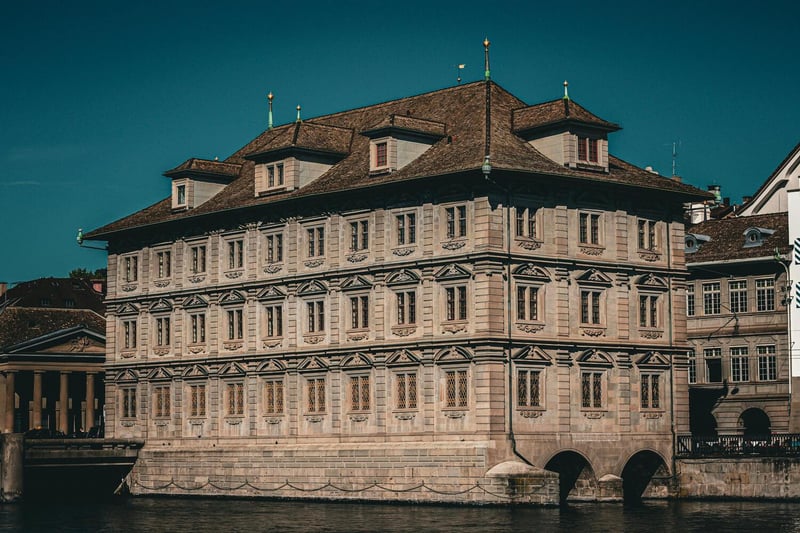
Why Zug is the default
Zug's 11.71% combined effective CIT is one of the two lowest in Switzerland, 0.05 points above Lucerne. Our office is on Baarerstrasse 14, three minutes from the Handelsregisteramt Kanton Zug and the major Zug notaries. Why we register most GmbHs in Zug.
When Zurich makes sense
Zurich's 19.47% effective CIT is high, but the banking depth, talent density and international brand signal carry real weight for certain businesses, especially fintech, asset management, and anything with a frequent cross-border audience.
When Geneva makes sense
Geneva at 14.70% combines moderate tax with the international-organisation ecosystem, commodity-trading houses and a mature wealth-management industry. The right choice for structures with a UN-agency or commodities angle.
GmbH vs AG
GmbH vs AG — a side-by-side
The two Swiss incorporated forms answer different questions. The GmbH is optimised for owner-operators; the AG is optimised for capital. Everything else is downstream of that single difference.
| Attribute | Swiss GmbH | Swiss AG |
|---|---|---|
| Minimum share capital | CHF 20,000 | CHF 100,000 |
| Paid-in at formation | 100% of capital | At least 50,000 or 20% (whichever is higher) |
| Owner disclosure | Partners and quotas published in Handelsregister | Shareholders stay private (registered-share book is internal) |
| Share / quota transferability | Notarised assignment; register update | Endorsement / assignment; internal share register |
| Audit default | Limited audit; opt-out if ≤ 10 FTEs | Limited audit; opt-out if ≤ 10 FTEs |
| Typical use case | Owner-operator SMEs, 1–5 partners, small holdings | Capital raises, IPO path, multi-investor structures |
| End-to-end timeline | 2–4 weeks | 3–6 weeks |
Still not sure? Read the Swiss AG formation page (the 100k-capital sibling)
Forward planning
When you should convert your GmbH to an AG
A GmbH can be converted into an AG without liquidation under the Swiss Merger Act (Fusionsgesetz, FusG art. 53 ff). The usual triggers are an incoming external investor, a capital raise that needs share-class flexibility, or an IPO path that requires private shareholders. Mechanically, the conversion requires a notarised partners' resolution, a top-up of share capital from CHF 20,000 to at least CHF 100,000 (the AG minimum under OR art. 621), and a new Handelsregister filing that replaces the GmbH register entry with the AG entry. The legal personality continues unbroken (FusG art. 53). For most foreign-founder GmbHs this is a 4 to 6 week project and is worth keeping in mind at formation so that the statutes do not need to be rewritten from scratch when the moment comes.
After incorporation
After incorporation — the first-year compliance list
A Swiss GmbH is a going concern the day the Handelsregister publishes its entry. The first twelve months carry four recurring obligations every foreign-founder GmbH has to plan for.
VAT registration — the CHF 100,000 threshold
If worldwide taxable turnover exceeds CHF 100,000 per year, the GmbH must register for Swiss VAT with the Federal Tax Administration (ESTV) under MWSTG art. 10. Foreign operators making any supply in Switzerland are liable from the first Swiss franc of turnover and must usually appoint a fiscal representative. The standard VAT rate is 8.1%; reduced (2.6%) and accommodation (3.8%) rates apply in specific sectors. Full walk-through in our Swiss VAT page.
AHV / AVS social insurance on officer salaries
First-pillar pension contributions (AHV / AVS) are due on salaries paid to managing officers and employees. Contributions are split between employer and employee; the GmbH handles registration with the cantonal AHV office and monthly payroll declarations. Typical officer-salary contribution levels are re-confirmed annually by the federal social-insurance office; we build the payroll set-up into the first-year engagement.
35% withholding tax on dividend distributions
Dividends distributed by a GmbH to its partners are subject to 35% Swiss withholding tax at source. Swiss-resident partners recover the full amount via the annual tax return if they declare the income. Non-resident partners rely on the Swiss double-taxation-treaty network for reductions; for example, a US corporate parent on a 10%-plus shareholding typically drops to 5%. This is a planning point at formation, not an afterthought.
Accounting and annual filings
The GmbH is bound by the Swiss Code of Obligations book-keeping rules (OR art. 957 and following). Annual financial statements, a partners'-meeting minutes file, and a tax return are due every year. We hand off to our Swiss accounting service for ongoing compliance after formation.
Our engagement
What you get from us (and how we scope a quote)
We do not publish a price list for GmbH formation. Fixed-price packages on fiduciary sites look reassuring, but they almost always either under-scope (bank-account onboarding, UBO documentation, apostille courier, canton variation) or price the average client. Every engagement here is scoped on the facts, quoted in writing, and fixed before any invoice.
Scope of a typical GmbH formation engagement
- Pre-formation review of planned activity, canton, partner structure and capital source.
- Drafting of articles of association, partners' resolutions, powers of attorney.
- Notary coordination, consignment-account opening, and capital-deposit confirmation.
- Handelsregister filing with the canton of your choice.
- VAT registration with ESTV, where thresholds are met.
- AHV / AVS social-insurance registration with the cantonal office.
- Hand-off to first-year accounting and payroll (separate engagement).
How we scope your quote
Send us planned activity, canton preference, number of partners, capital source and residency, and banking preferences. Within 2 to 3 business days we return a written proposal with a fixed fee, the full scope, and any items priced separately. See how we scope and quote our engagements for the general model.
FAQ
Frequently asked questions about Swiss GmbH formation
What is the minimum capital for a Swiss GmbH?
CHF 20,000, fully paid-in at formation. Legal basis: Swiss Code of Obligations article 773 (minimum) and article 777c (full payment). Unlike an AG, no 20%-paid-in discount applies.
Does the GmbH capital need to be fully paid at formation?
Yes. 100% of the CHF 20,000 is deposited into a Swiss consignment account before the Handelsregister registers the new entity (OR art. 777c). The bank releases the funds once the register entry is confirmed.
Can I contribute equipment or IP as capital instead of cash?
Yes. OR art. 777c allows in-kind contributions, including real estate, machinery, and intellectual property. An independent auditor must certify the valuation before the notary deed. Cash is the fastest path; in-kind typically extends the timeline by 2 to 3 weeks.
Are GmbH partners public, or can I keep my ownership private?
Partners and their quota sizes are published in the cantonal Handelsregister and are searchable via Zefix. This is a structural difference from an AG, where ordinary shareholders stay private. Beneficial owners holding at least 25% are reported to the federal Transparency Register, which is not public (TJPG art. 4 and 9, in force since 1 October 2026).
Can I be the sole partner and the sole managing officer?
Yes, a single-person GmbH is allowed. But that sole officer must either reside in Switzerland (OR art. 814.3) or be accompanied by a Swiss-resident co-signatory. For foreign founders this is typically solved via a nominee-director service or a Swiss-resident co-officer.
Do I, as a foreigner, need a Swiss-resident manager to form a GmbH?
You need at least one person with sole or joint signing authority who resides in Switzerland (OR art. 814.3). You yourself do not need to move. A Swiss-resident nominee or co-officer satisfies the rule.
How long does GmbH incorporation take?
2 to 4 weeks end-to-end is typical, assuming all documents are ready and the canton is not backed up. Name check 1 day, articles and notary 3 to 7 days, consignment account 1 to 3 days, Handelsregister 7 to 21 days, VAT and bank 5 to 30 days where applicable.
Does a small GmbH need an auditor?
Usually no. Under OR art. 727 and 727a, a limited audit is the default; you can opt out entirely if you have 10 or fewer full-time employees and all partners consent. An ordinary audit is only required when two of three thresholds (CHF 20 m balance sheet, CHF 40 m turnover, 250 FTEs) are exceeded for two consecutive years.
Can I convert my GmbH into an AG later?
Yes, without liquidation, under the Swiss Merger Act. Typical triggers are external investors, a capital raise, or an IPO path. The conversion requires a notarised resolution, a top-up of share capital from CHF 20,000 to CHF 100,000, and a new Handelsregister filing.
Which canton is cheapest for a GmbH?
For tax year 2026 the lowest combined effective corporate tax rates on CHF 1 million of profit are in the city of Lucerne (11.66%) and the city of Zug (11.71%), followed by Nidwalden (11.97%) and Schaffhausen (12.02%). Zurich sits at 19.47% and Bern at 20.25%. The minimum capital is the same CHF 20,000 everywhere.
Does my foreign residence matter for the company to exist?
No. The foreign residence of partners is irrelevant to whether the GmbH can be formed. What matters is that CHF 20,000 capital is paid in and that at least one signatory resides in Switzerland. Your own residency affects personal tax and permit questions, not the company’s legal existence.
What happens to my GmbH if a partner leaves?
Quotas can be transferred to another partner or to a third party by notarised assignment under the Swiss Code of Obligations; the transfer is published in the Handelsregister. The GmbH itself continues. Drag-along, pre-emption, and buy-back terms are typically added to the statutes at formation to control this outcome.
Fit check
Where a GmbH engagement doesn't fit
- We don't publish a fixed price list. Every GmbH formation is scoped on the facts and quoted in writing within 2 to 3 business days, so if you need instant self-service pricing before you'll even talk to us, this isn't that model.
- The full CHF 20,000 capital has to be paid in before the notary deed is signed. Unlike an AG, which can form on CHF 50,000 paid in against a CHF 100,000 headline capital, there is no partial-payment discount for a GmbH.
- You need a Swiss-resident signatory in place before the register will accept the filing (OR art. 814.3). If you can't secure one through a nominee, relocation or a Swiss-resident co-founder, the filing stalls at step 4.
- The standard timeline is 2 to 4 weeks minimum, and in-kind capital contributions or slow bank due diligence on foreign UBOs commonly push that to 5 weeks or more. This is not a same-week incorporation.
- Partner names and quota values are published on the public Handelsregister and searchable on Zefix. If ownership privacy matters to you, an AG keeps shareholders off the public register instead.
Next step
Ready to start your Swiss GmbH?
Send us the shape of your structure — canton, partners, activity, capital source. We return a written fixed-fee proposal within 2 to 3 business days. No phone call required to start, but we can book one if that is easier.