Capital gains
Capital Gains Tax in Switzerland: Private Gains, Business Gains, and the Exceptions
Switzerland is one of the few advanced economies where a private investor pays no income tax on gains from shares, funds or privately held crypto. The exemption is real, but it has firm edges: real estate, professional trading and company-level gains are each taxed differently.
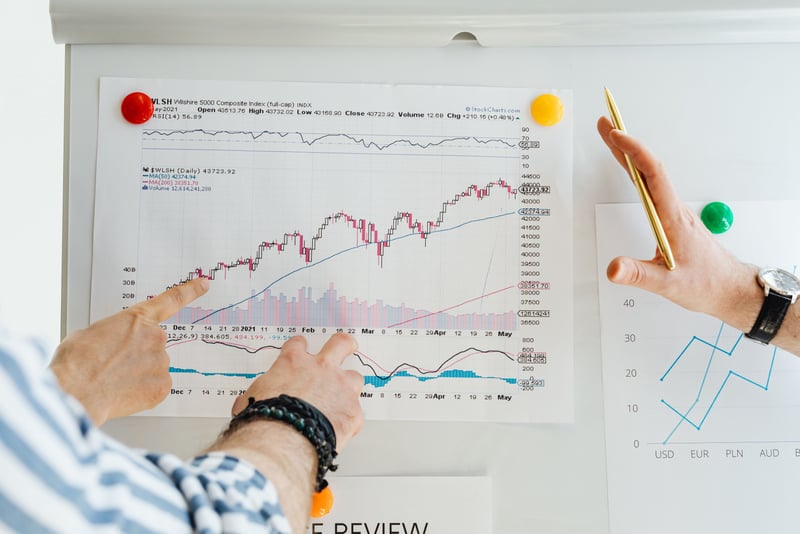
For private individuals, Switzerland generally does not tax capital gains on movable assets. A profit from selling listed shares, fund units, bonds or cryptocurrency held in a personal portfolio is, as a rule, free of income tax. The rule is written into federal law at article 16 paragraph 3 of the Federal Direct Tax Act (DBG art. 16 para. 3) and mirrored in every cantonal code through the tax-harmonisation law (StHG art. 7 para. 4 lit. b). It is one of the country's most cited attractions for investors and relocating families.
The exemption is not unconditional. It covers private wealth held as a passive investment. It does not extend to real estate, which is caught by a separate cantonal property-gains tax, to anyone the authorities classify as a professional securities dealer, or to gains realised inside a company, where a profit is ordinary taxable income. This guide sets out exactly where the line falls: asset by asset, for residents and non-residents, for individuals and companies, and it separates capital gains from the two taxes most often confused with it, wealth tax and the 35% withholding tax.
By the numbers
The figures that anchor this topic.
0%
Private movable-asset gains · DBG art. 16.3
35%
Withholding tax on dividends · VStG art. 13
26
Cantonal real-estate gains regimes · StHG art. 12
≥ 10%
Participation exemption threshold · DBG art. 69-70
The short answer
Does Switzerland have a capital gains tax?
No, Switzerland levies no general capital gains tax on private movable assets. A private investor who sells listed shares, fund units, bonds or privately held cryptocurrency at a profit owes no income tax on that gain, under DBG art. 16 para. 3. The relief is automatic: there is no annual exemption to track and no minimum holding period to earn it.
Two exceptions sit on top of that headline. First, real estate is always taxed, through a dedicated cantonal property-gains tax. Second, if you trade as a profession, the authorities can reclassify your gains as taxable self-employment income. A third boundary applies to companies, whose gains are ordinary taxable profit. Everything else in this guide is detail on those three lines.
Because the exemption is conditional rather than absolute, "tax-free" is true only for a private investor holding movable wealth who is not a real-estate seller, not a professional dealer, and not transacting through a company. A page that states those conditions plainly is more reliable than one that asserts a flat "no capital gains tax".
The matrix
The three-way split: how Swiss law treats different assets
The whole answer turns on a matrix of person type by asset type. The same gain can be exempt or fully taxed depending on who holds the asset and what the asset is. Three asset families behave differently:
- Movable private wealth, meaning shares, ETFs, bonds and private crypto held by an individual, is exempt. Basis: DBG art. 16 para. 3 and StHG art. 7 para. 4 lit. b.
- Real estate is always taxed, through the cantonal property-gains tax (Grundstückgewinnsteuer), regardless of whether the seller is a private individual. Basis: StHG art. 12.
- Business and company assets are taxed as ordinary income or corporate profit, with no exemption. Basis: DBG art. 18 for the self-employed and ordinary corporate profit tax for companies.
Person type matters as much as asset type. The very same parcel of shares is exempt in a salaried investor's private portfolio but fully taxable once it is treated as part of a business activity, and it then also attracts social-security contributions (AHV/AVS). The grey zone between private and business holding is where the professional-trader test below does its work.
The main exception
When private becomes professional: the safe-harbour test
If the Federal Tax Administration reclassifies you as a professional or commercial securities dealer (gewerbsmässiger Wertschriftenhändler), your gains stop being tax-free. They are recharacterised as self-employment income, taxed at your ordinary rate, and become subject to AHV/AVS contributions. The framework comes from federal court practice and the FTA's Circular No. 36 (KS 36, dated 27 July 2012), which sets out a safe harbour.
Under that safe harbour, an individual is treated as a private investor when all five of the following hold:
- The securities sold have been held for at least six months.
- Transaction volume in the calendar year, meaning all purchase prices plus all sale proceeds, is no more than five times the securities and cash holdings at the start of the tax period.
- Realised capital gains make up less than half of net income, so gains are not needed to cover living costs.
- The investments are not debt-financed, or the taxable income they produce (interest, dividends) exceeds the interest on the debt.
- Derivatives are used only to hedge the taxpayer's own holdings, not to speculate.
This is a safe harbour, not a hard rule: meeting every condition gives strong comfort that gains stay exempt, while missing one does not automatically make you a dealer, it returns the question to a full weighing of indicators. If you are reclassified, the gains are taxed as ordinary self-employment income plus AHV/AVS, which can be materially higher than zero. To stay inside the harbour, the practical recipe is to buy and hold, avoid leverage and limit speculative derivatives. Where the position is genuinely borderline, an advance tax ruling confirms the treatment before you trade at scale.
Securities
Capital gains on shares, ETFs and bonds
For an ordinary investor, listed securities are the default exempt case. A gain on selling shares, ETF units or bonds from a private portfolio is free of income tax under DBG art. 16 para. 3, provided you remain on the private-investor side of the safe-harbour test above. There is no separate capital gains schedule and no holding-period requirement.
Two adjacent charges are easy to confuse with a capital gain and should be kept separate. Dividends are different: the price gain on a share is exempt, but the dividend it pays while you hold it is taxable investment income, and Swiss dividends carry a 35% withholding tax (VStG art. 13) that you reclaim through your return. Our guide to Swiss dividend taxation covers the partial-taxation relief for qualifying holdings.
There is also a small transaction duty, not a capital gains tax: Swiss transfer stamp duty of 0.15% on Swiss securities and 0.30% on foreign securities applies when you trade through a Swiss securities dealer (StG art. 13 ff). It is charged on the transaction, win or lose, and has nothing to do with whether you made a gain.
Crypto
Crypto capital gains tax
Privately held cryptocurrency is treated as movable private wealth, so a gain on selling Bitcoin, Ether or similar payment tokens from a personal holding is, as a rule, tax-free under the same article 16 paragraph 3 principle that covers shares. The same five-criterion safe harbour applies: high-frequency or leveraged crypto trading can tip you into professional-dealer status, at which point the gains become taxable.
Two things are taxed even when the disposal gain is not. First, the tokens themselves are subject to the annual wealth tax, valued at the FTA's year-end rates, not on disposal. Second, rewards from staking, mining, lending and airdrops are income, taxed at fair market value when received, rather than exempt capital gains. To avoid accidentally becoming a professional crypto trader, the same discipline applies as for securities: hold rather than churn, avoid leverage, and keep derivatives to genuine hedging.
The cantonal valuation rates, wallet reporting and the income-versus-gain split are set out in our dedicated Swiss crypto tax guide. Founders running token operations as a business, rather than holding privately, should look at the crypto company route, where the analysis is corporate rather than personal.
Real estate
Real-estate gains tax (Grundstückgewinnsteuer)
The movable-asset exemption does not apply to real estate. Gains on selling Swiss immovable property are caught by a dedicated cantonal property-gains tax (Grundstückgewinnsteuer), levied by the canton or municipality where the property sits under StHG art. 12. It applies to private owners as well as businesses, so the tax-free principle for movable wealth has no equivalent here. Cantons run either monistic systems (a single special tax for all sellers) or dualistic ones (private gains under the special tax, business gains in ordinary income).
The defining feature is that the tax is degressive with the holding period: the longer you have owned the property, the lower the rate on the gain, with surcharges on very short ownership to discourage speculation. A deferral mechanism (Ersatzbeschaffung) postpones the tax when you reinvest the proceeds of an owner-occupied primary residence into a replacement home within the period the canton allows (StHG art. 12 para. 3 lit. e): two years in about half of the cantons, between one and five years in the rest.
Because each of the 26 cantons sets its own schedule, the burden on an identical gain varies widely. Four examples from the cantonal rules for the 2025 tax period:
- Zurich: a progressive scale from 10% to 40% of the gain (40% on the part above CHF 100,000). The tax rises by 50% on a sale within one year and by 25% within two years, and falls by 5% after five full years of ownership, rising in steps to a 50% reduction after 20 years.
- Geneva: a flat 50% on a sale within two years, falling in steps to 10% for ownership of 10 to 25 years and 2% after 25 years.
- Ticino: 31% on a sale within one year, falling year by year to 4% after 30 years.
- Lucerne: the tax is computed on the gain alone using the income-tax scale, and gains under CHF 13,000 are not taxed. It rises by 10% for each full year that ownership falls short of six years and falls by 1% for each full year beyond eight, up to 25%.
A family consolidating Swiss property inside a structured vehicle, for example through a family office, should model the property-gains tax canton by canton before any transfer.
Non-residents
Capital gains for non-residents and expats
The treatment for non-residents tracks the asset, not the residence. A non-resident's gain on Swiss securities held as private wealth is exempt, exactly as it is for a resident, unless the activity amounts to professional trading. Switzerland does not reach across the border to tax a foreign investor's portfolio gains.
Swiss real-estate gains are different. They are taxed by the canton where the property sits, under limited tax liability (beschränkte Steuerpflicht) based on economic affiliation. A non-resident selling Swiss property owes the cantonal property-gains tax regardless of where they live, and some cantons require a security deposit or withholding at the point of sale to secure the tax.
A note for US citizens: the Swiss exemption does not remove your US tax exposure. Under the saving clause in the Switzerland-US tax treaty, the United States continues to tax its citizens on worldwide gains, so a US person can be tax-free in Switzerland yet still owe US capital gains tax. This is a cross-border situation that warrants specialist advice rather than a general rule.
Company level
Company-level treatment: AG and GmbH
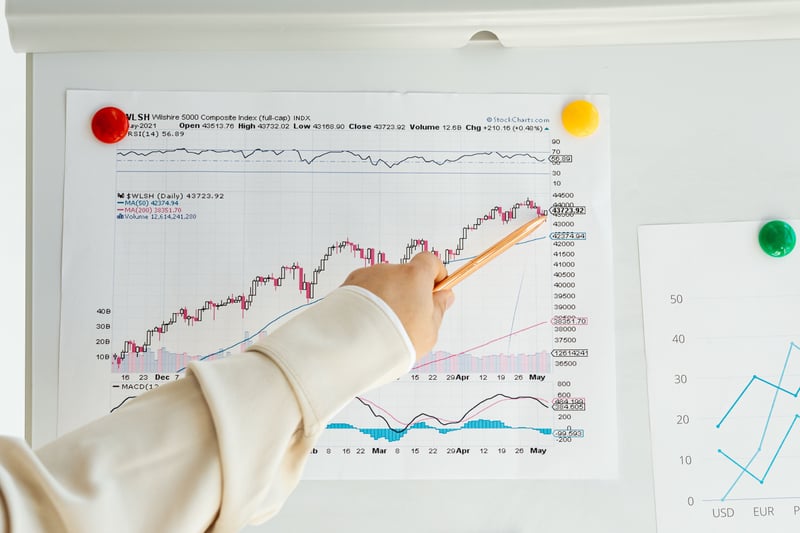
The personal exemption is exactly that, personal. There is no article 16(3) relief at company level. When a Swiss AG or GmbH sells an asset at a profit, the gain is ordinary taxable profit and feeds into the corporate income tax base like any other earning. In 2026 the combined effective rate in the cantonal capitals runs from 11.66% in Lucerne to 20.25% in Bern, with an unweighted average of 14.10% and 11.71% in the city of Zug; the federal share is 8.5% of profit after tax (DBG art. 68), or 7.83% of profit before tax. This matters whenever an investment is held through an operating company or a holding rather than personally.
The important relief at company level is the participation exemption (Beteiligungsabzug). A capital gain on a shareholding of at least 10% of another company's capital, or of at least 10% of its profits and reserves, held for at least one year, is effectively relieved from corporate income tax through a participation reduction (DBG art. 69 and art. 70 para. 4). The alternative test of a holding worth at least CHF 1,000,000 applies to dividends only, not to capital gains. This is the mechanism that lets a Swiss holding company sell a subsidiary largely free of tax, and it is why the choice between holding investments privately or through a company is a deliberate tax decision. Getting the corporate tax position and reporting right is what our Swiss tax and accounting service handles.
Edge cases
Anti-abuse traps when selling a company stake
Two doctrines turn what looks like a tax-free private share sale into taxable income, and both catch owner-managers selling a closely held company. They exist precisely to stop the capital gains exemption being used to extract company reserves tax-free.
Indirect partial liquidation (indirekte Teilliquidation, DBG art. 20a para. 1 lit. a, StHG art. 7a para. 1 lit. a) applies when you sell a stake of at least 20% from private wealth to a company or a business owner, and within five years, with your cooperation, the company distributes non-operating reserves that already existed and were distributable at the time of sale. What you booked as a tax-free gain is recharacterised, in part, as a taxable dividend in your hands. Transposition (DBG art. 20a para. 1 lit. b, StHG art. 7a para. 1 lit. b) applies when you transfer a private shareholding to a company in which you hold at least 50% after the transfer, and receive more than the nominal value plus capital-contribution reserves of the shares transferred: the excess is taxed as investment income.
Because both rules hinge on transaction structure rather than intent, you cannot rely on the headline exemption when selling a company stake. The safe course before any sale of a closely held company is to map the buyer's financing and the reserve position, and where the amounts are material, to secure an advance tax ruling.
What it is not
What capital gains tax is NOT: wealth tax and withholding tax
Two other taxes are routinely mistaken for a capital gains tax. Neither is. Keeping them separate is the single biggest source of confusion this guide resolves.
Wealth tax (Vermögenssteuer) is an annual tax on your net assets, levied only by cantons and municipalities, with no federal equivalent. It is progressive and modest: in 2026 the effective rate in the cantonal capitals runs from 0.12% of taxable wealth in Stans (Nidwalden) to 0.85% in Geneva. It applies to the value of what you hold, including shares and crypto, not to any gain on selling it. The annual mechanics are set out in our Swiss wealth tax guide.
Withholding tax (Verrechnungssteuer) is a 35% anticipatory tax on dividends and Swiss-source interest (VStG art. 13). It is deducted at source from income and is refundable, or reduced under a tax treaty, when you declare the underlying income. It bites on the cash an asset throws off, not on the gain when you sell the asset, which usually remains exempt.
In practice
Getting certainty: tax rulings and the cantonal angle
For most private investors the conclusion is the headline one: the gain is tax-free. The value in the detail is catching the minority of cases where it is not, and the cleanest way to remove doubt is an advance ruling. A Swiss tax ruling (Steuervorbescheid) is a written confirmation from the cantonal authority of how a specific transaction will be taxed, binding so long as you carry it out as described. It is the right tool for a company-stake sale exposed to the anti-abuse rules, a borderline professional-trader profile, or a non-resident property disposal.
The cantonal dimension cuts across everything above. Corporate effective rates, wealth-tax bands and property-gains schedules all differ by canton, which is why low-tax cantons such as Zug, at 11.71% effective corporate tax in 2026, feature so heavily in structuring decisions. If your situation runs beyond the simple private-investor case, the practical next step is to talk to a specialist who can confirm the treatment and, where it helps, arrange a ruling before you transact. For the wider tax picture, our Swiss VAT guide and the rest of the tax series sit alongside this one. We work on a custom-quote basis.
FAQ
Frequently asked questions
Does Switzerland have a capital gains tax?
No general capital gains tax applies to private movable assets such as shares, ETFs, bonds and privately held crypto for private investors; real estate and professional-trader gains are taxed. The legal basis for the exemption is article 16 paragraph 3 of the Federal Direct Tax Act (DBG art. 16 para. 3).
How much is capital gains tax in Switzerland?
0% on qualifying private movable gains. For real estate the cantonal property-gains tax (Grundstückgewinnsteuer) ranges widely: in Geneva it is 50% on a sale within two years and 2% after 25 years, in Ticino 31% within one year and 4% after 30 years. The exact rate depends on the canton and the holding period.
Is Switzerland really tax-free on capital gains?
For private investors who pass the safe-harbour test for movable assets, yes. The exemption does not cover real estate, which is taxed by the canton, professional securities dealing, or gains realised inside a company.
When do I become a professional securities dealer?
When you fail the safe-harbour test from FTA Circular No. 36: securities held for at least six months, annual turnover no more than five times the holdings at the start of the year, gains under half of net income, no debt financing (or investment income above the interest paid), and derivatives used only for hedging. If reclassified, your gains are taxed as self-employment income plus AHV/AVS social contributions.
Are crypto gains taxed in Switzerland?
Private crypto capital gains are tax-free under the same safe-harbour test that covers shares. Crypto is, however, subject to the annual wealth tax at year-end value, and staking, mining, lending and airdrop rewards are taxed as income at receipt rather than as exempt gains.
Do I pay capital gains tax on shares or stocks in Switzerland?
No, if you remain a private investor under the five safe-harbour criteria. Dividends are different: Swiss dividends carry a 35% withholding tax (VStG art. 13) that is refundable or treaty-reduced when you declare the income.
Do non-residents pay capital gains tax in Switzerland?
There is no Swiss tax on private securities gains for non-residents. Swiss real-estate gains are taxed by the canton where the property sits, under limited tax liability, and some cantons require a security deposit or withholding at the point of sale.
Is there capital gains tax when selling property in Switzerland?
Yes, the cantonal property-gains tax (Grundstückgewinnsteuer, StHG art. 12). The holding period and the canton set the rate, and a deferral exists when you reinvest the proceeds of an owner-occupied primary residence into a replacement home.
How is real-estate gains tax calculated?
On the gain, meaning sale price minus adjusted cost, with a surcharge for very short holds and a degressive reduction for long holds. Rates and schedules are set by each canton: Zurich, for example, adds 50% to the tax on a sale within one year and reduces it by up to 50% after 20 years of ownership.
Do Swiss companies pay capital gains tax?
Yes. An AG or GmbH gain is ordinary corporate profit with no article 16(3) exemption, taxed in 2026 at between 11.66% and 20.25% effective depending on the cantonal capital. The participation exemption can relieve a gain on a qualifying shareholding, broadly at least 10% held for at least one year (DBG art. 69-70).
What is the difference between capital gains tax and wealth tax in Switzerland?
Wealth tax is an annual cantonal tax on net assets, between 0.12% and 0.85% of taxable wealth in the cantonal capitals in 2026, charged on the value of what you hold. A tax on private movable capital gains does not exist. They are separate concepts: one taxes holding, the other would tax disposal.
Is the 35% withholding tax a capital gains tax?
No. It is anticipatory tax on dividends and Swiss-source interest (VStG art. 13), refundable or treaty-reduced when you declare the income. Gains on selling the underlying shares are a separate matter and are usually exempt.
Keep reading
Related guides and services.
Turn this into a Swiss plan that works.
A 30-minute call to map your structure, canton, timeline and required substance. No price-list. Every engagement is scoped on the call.