Double tax treaties
Swiss double tax treaties: how the DTA network works for foreign owners
Switzerland runs one of the densest treaty networks in the world. For a foreign owner, a double taxation agreement decides whether a Swiss dividend leaves the country taxed at 35 percent or at a fraction of that, and exactly how the difference is reclaimed.
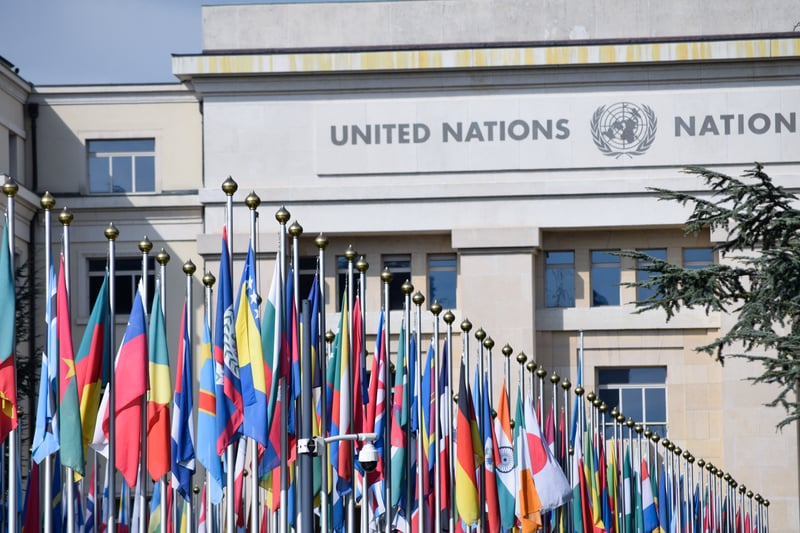
A double taxation agreement (DTA), also called a tax treaty or in German a Doppelbesteuerungsabkommen, is a bilateral contract between two states that decides which of them may tax a given item of cross-border income. Switzerland has concluded more than 100 such income-tax agreements, most of them built on the OECD Model Convention. The State Secretariat for International Finance (SIF) keeps the canonical list of treaties in force, and the Federal Tax Administration (ESTV) administers the relief that flows from them.
For an investor or group using a Swiss company, the treaties matter for two everyday reasons. They allocate taxing rights so that the same profit is not taxed in full in two countries, and they reduce the Swiss withholding tax that would otherwise apply to dividends and certain interest leaving the country. This guide explains how the network is structured, the two methods of relief, the rates a treaty can deliver, and the step-by-step procedure to reclaim the 35 percent Swiss withholding tax.
By the numbers
The figures that anchor this topic.
100+
Countries with a Swiss income-tax DTA · SIF
35%
Domestic withholding tax · VStG art. 13
0 / 5 / 10 / 15%
Typical treaty dividend rates
3 years
Deadline to file a refund claim
The starting point
What a double tax treaty is, and why the network matters.
Double taxation happens when two countries tax the same income under their own rules: the country where the income arises (the source state) and the country where the recipient is resident (the residence state). A double taxation agreement prevents that overlap. It assigns the primary right to tax each category of income to one state, limits what the other may take, and sets out a method for the residence state to relieve any remaining double charge.
Switzerland has built one of the largest networks in the world: income-tax DTAs with more than 100 countries, alongside a much smaller set of eight separate estate and inheritance-tax treaties. Because most agreements follow the OECD Model Convention, they share a common architecture: definitions of residence and permanent establishment, distributive rules for each income type, a method article, and procedural articles on mutual agreement and exchange of information. The network is aimed squarely at foreign owners and investors with cross-border flows: a UK-resident shareholder of a Swiss company, a group routing dividends through Switzerland, or a non-resident receiving Swiss interest or royalties.
Exemption vs credit
How a treaty stops you being taxed twice.
Every treaty relieves double taxation in one of two ways, and Switzerland uses both depending on the income. The default for treaty income is exemption with progression: foreign income that the treaty allocates to the other state is exempt in Switzerland, but it is still counted when setting the tax rate that applies to the taxpayer's remaining Swiss income. The income escapes Swiss tax; it does not escape the progression calculation.
The second method is the credit method. Where a foreign state has levied an irrecoverable withholding tax on investment income such as dividends, interest or royalties, Switzerland credits that foreign tax against the Swiss tax due on the same income, up to the Swiss amount. Which method applies turns on the specific treaty article and the type of income, so the routing question (exemption or credit) should be settled per income stream rather than assumed. Where the amounts are material, an advance tax ruling can confirm the treatment before money moves.
The 35 percent
Swiss withholding tax on dividends, interest and royalties.
The relief only makes sense once you see what is being relieved. Switzerland levies a flat 35 percent federal anticipatory tax (Verrechnungssteuer) on dividends paid by a Swiss company, under article 13 of the Withholding Tax Act. That is the headline charge a treaty brings down for a qualifying foreign recipient.
Interest is treated more narrowly. There is no Swiss withholding tax on ordinary commercial loans; the 35 percent applies only to interest on bonds and bond-like collective debt, and to bank interest paid to non-banks. Royalties are different again: Switzerland levies no domestic withholding tax on royalties at all, which distinguishes it from many EU states, so no treaty reduction is needed for royalties paid out of Switzerland. Keep the two directions of flow separate: this section is about Switzerland as the source state, not about foreign withholding tax credited back in Switzerland.
Reclaiming the tax
How treaty residents reclaim Swiss withholding tax.
The single most misunderstood point is that Swiss treaty relief on dividends is given by refund, not at source. The Swiss company first withholds the full 35 percent and pays it to the ESTV; the foreign recipient then reclaims the excess over the treaty rate afterwards. You receive the net 35 percent first and claim the difference back later.
The procedure runs as a short sequence:
- Identify the treaty rate that applies to your dividend or interest.
- Obtain the country-specific refund form prescribed by the ESTV for your state of residence.
- Get a tax voucher showing the deduction; your bank or custodian usually issues it, which is one reason a Swiss banking relationship matters. Our guide to opening a Swiss bank account covers that step.
- Prove residence in the treaty state, certified by your home tax authority.
- Confirm you are the beneficial owner of the income.
- File the claim with the ESTV.
The deadline is firm: a claim must be filed by 31 December of the third year following the year in which the income fell due. Miss it and the right to the refund lapses. The beneficial-owner condition is the anti-conduit gate: the treaty rate is available only to the true economic owner of the income, not to an interposed pass-through, which links directly to the principal-purpose test below. Filing and ongoing compliance can be handled with Swiss accounting and tax compliance support.
Treaty rates
Treaty-reduced rates: UK, US, Germany and France.
The table sets out the maximum source-state rates in four of the most-used treaties, taken from their dividend, interest and royalty articles. The qualifying shareholding and holding period differ from one agreement to the next, so the company column states the condition.
| Treaty partner | Dividends, qualifying company | Dividends, other holders | Interest | Royalties |
|---|---|---|---|---|
| United Kingdom | 0% (at least 10% of the capital; also UK pension schemes) | 15% | 0% | 0% |
| United States | 5% (at least 10% of the voting rights, held directly; 0% for pension funds) | 15% | 0% | 0% |
| Germany | 0% (at least 10% of the capital, held directly for 365 days) | 15% | 0% | 0% |
| France | 0% (at least 10% of the capital) | 15% | 0% | 5% |
The split between the two tiers is driven by the shareholding threshold and beneficial-owner status. A company holding a substantial participation that meets the treaty's minimum percentage and holding period reaches the lowest rate, often 0 or 5 percent; a portfolio investor with a small stake falls into the higher band. The same logic explains why holding structures, rather than individuals, capture the best outcomes.
United Kingdom
The Swiss-UK double tax treaty in detail.
The agreement between the United Kingdom and Switzerland is one of the most frequently queried, because so many investors and groups straddle the two. The original 1977 convention has been amended several times, most recently by the 2017 protocol, which was signed on 30 November 2017 and entered into force on 19 July 2019. It is an OECD-model income and capital gains treaty that operates independently of EU membership, so Brexit did not remove it.
For a UK shareholder, the headline outcome is strong: dividends paid to a UK company holding at least 10 percent of the capital fall to 0 percent, other dividends to 15 percent, and interest and royalties may be taxed only in the state of residence (treaty articles 10 to 12). The excess Swiss tax is claimed back through the ESTV refund procedure on Form 86. The treaty also carries a high-value detail that few pages explain: UK pension schemes are exempt from Swiss withholding tax on dividends, so a qualifying UK pension investor can recover the full 35 percent.
BEPS
The MLI and BEPS: how treaties are being updated.
Treaty benefits are no longer automatic for arrangements that lack commercial purpose. Switzerland signed the OECD's Multilateral Instrument (MLI), the BEPS Convention, in 2017, and it has been in force for Switzerland since 1 December 2019. The MLI can amend several bilateral DTAs at once rather than renegotiating each separately. Switzerland uses it for its treaties with Argentina, Austria, Chile, the Czech Republic, Iceland, Italy, Lithuania, Luxembourg, Mexico, Portugal, South Africa and Turkey, and brings its other treaties up to the BEPS minimum standards through bilateral amendments.
Its most important addition is the principal-purpose test (PPT): a treaty benefit can be denied where obtaining that benefit was one of the principal purposes of an arrangement, unless granting it would accord with the object and purpose of the treaty. The practical consequence is that treaty shopping through a letterbox entity fails. A Swiss company claiming relief should have genuine management, decision-making and economic activity in Switzerland, which connects the PPT back to the beneficial-owner condition on the refund claim.
PE and residence
Permanent establishment and residence tie-breaker rules.
A foreign enterprise is taxable in Switzerland on business profits only to the extent it operates through a permanent establishment (PE) here, such as a fixed place of business or a dependent agent. Under the OECD-model rule, business profits are taxed in the host state only to the extent they are attributable to the PE located there, which makes the PE question central to any cross-border structure.
Where both states would treat the same person as resident, the treaty resolves the conflict with the Article 4 tie-breaker ladder, applied in order:
- permanent home available to the person;
- centre of vital interests, where personal and economic ties are closer;
- habitual abode;
- nationality;
- mutual agreement between the two competent authorities.
For companies, many treaties amended under BEPS now resolve dual residence by mutual agreement rather than by the older place-of-effective-management test.
The structuring case
DTAs and Swiss holding companies.
The treaty network is one of the main reasons holding structures locate in Switzerland. Combine over 100 DTAs with the domestic participation exemption (Beteiligungsabzug), under which a Swiss company's income from qualifying shareholdings, broadly a stake of at least 10 percent or a market value of at least CHF 1,000,000, is effectively relieved at the corporate level, and inbound and outbound dividend flows can be managed at very low effective rates.
For qualifying intra-group dividends there is a cash-flow advantage on top: the notification or declaration procedure lets the paying company report the dividend and remit only the residual treaty rate, or nothing, rather than paying the full 35 percent and reclaiming it later. That removes the refund delay entirely for groups that meet the conditions. This is where the network becomes a structuring tool. Most such structures are set up through a Swiss holding company, frequently in Zug for its low combined tax rate, with the entity itself created via standard company formation.
Neighbouring instruments
DTA vs TIEA, AEOI and estate-tax treaties.
A double taxation agreement is easily confused with the instruments around it, so it is worth drawing the lines clearly. A DTA allocates taxing rights and reduces withholding tax. A tax information exchange agreement (TIEA) does neither: it only provides for the exchange of tax information between authorities and does not reduce anyone's tax.
The automatic exchange of information (AEOI) under the Common Reporting Standard, in force in Switzerland since 1 January 2017, is also a reporting regime, not a relief one: it reports account data, it does not lower a rate. Finally, Switzerland's eight estate and inheritance-tax treaties form a separate and much smaller network from the income-tax DTAs; do not assume a country with an income-tax treaty also has an estate-tax one. For the wider operating-tax picture once a company is running, see our Swiss VAT guide.
The official source
Where to find the current treaty list.
SIF publishes the list of Swiss DTAs as an overview, currently with status 1 January 2026, showing for each country the date of signing, every amending protocol and the dates of entry into force. That overview, not a third-party summary, is the authority on whether a treaty with a given country exists and what its status is. The treaty texts themselves are published in the Classified Compilation of Federal Legislation under SR 0.672.
Alongside it, the ESTV runs per-country pages for the United Kingdom, France, Germany and the rest, which hold the country-specific refund forms you need to file a reclaim: Form 82 for the United States, Form 83 for France and Form 86 for the United Kingdom, for example. The SIF overview tells you whether a treaty exists; the ESTV country page gives you the form.
FAQ
Frequently asked questions
How many double tax treaties does Switzerland have?
Switzerland has income-tax double tax treaties with more than 100 countries, plus eight separate agreements on inheritance and estate taxes. The State Secretariat for International Finance (SIF) publishes the official list, with status 1 January 2026, showing each treaty with its signing date, protocols and entry into force.
Does Switzerland have a tax treaty with the UK?
Yes. The 1977 convention, as amended by the 2017 protocol that entered into force on 19 July 2019, is an income and capital gains treaty. Dividends paid to a UK company holding at least 10 percent of the capital fall to 0 percent, other dividends to 15 percent, interest and royalties are taxable only in the state of residence, and UK pension schemes are exempt from Swiss withholding tax on dividends. It operates independently of EU membership, so it was unaffected by Brexit.
What is the Swiss withholding tax, and can I get it back?
Switzerland levies a flat 35 percent federal anticipatory tax (Verrechnungssteuer) on dividends paid by a Swiss company. A treaty resident reclaims the excess over the treaty rate by filing a country-specific refund claim with the Federal Tax Administration, supported by proof of residence and a tax voucher showing the deduction.
How do I reclaim Swiss withholding tax under a treaty?
File the country form with the Federal Tax Administration, attaching proof of residence certified by your home tax authority and a tax voucher showing the deduction. You must be the beneficial owner of the income. Relief is granted by refund, not at source, so the full 35 percent is withheld first and the difference down to the treaty rate is reclaimed afterwards.
What is the deadline to claim a withholding-tax refund?
A claim must be filed by 31 December of the third year following the calendar year in which the income fell due. If the deadline passes, the right to the refund lapses, so reclaim documentation should be prepared well before that date.
Does Switzerland avoid double taxation by exemption or credit?
It uses both. For treaty income Switzerland generally applies exemption with progression, where foreign income is exempt but still counted to set the rate on remaining Swiss income. Irrecoverable foreign withholding tax on investment income such as dividends, interest and royalties is instead relieved by the credit method, up to the Swiss tax on the same income.
Has Switzerland signed the MLI / BEPS Convention?
Yes. Switzerland signed the Multilateral Instrument in 2017 and ratified it in 2019. It applies the MLI to 12 of its treaties and updates the others bilaterally; both routes add an anti-abuse principal-purpose test under which a treaty benefit can be denied if obtaining it was a principal purpose of an arrangement. That makes genuine substance in Switzerland important for treaty relief.
What are the residence tie-breaker rules in a Swiss treaty?
Where both states would treat a person as resident, residence is decided in order by permanent home, then centre of vital interests, then habitual abode, then nationality, and finally mutual agreement between the two competent authorities, following Article 4 of the OECD Model Convention.
Do Swiss treaties cover permanent establishments?
Yes. A permanent establishment is a fixed place of business, or a dependent agent, through which a foreign enterprise carries on business in Switzerland. Under a treaty, business profits are taxed in the other state only to the extent they are attributable to a permanent establishment located there.
Does a treaty reduce tax on a Swiss holding company's dividends?
Yes. Combined with treaty rates and the domestic participation exemption, a Swiss holding company can manage inbound and outbound dividends at very low effective rates. For qualifying intra-group dividends, a notification or declaration procedure lets the company remit only the residual rate, or nothing, so qualifying flows can move at 0 percent without the refund delay.
What is the difference between a DTA and a TIEA?
A double taxation agreement allocates taxing rights between two states and reduces withholding tax. A tax information exchange agreement only provides for the exchange of tax information between authorities and does not reduce anyone's tax. The automatic exchange of information under the Common Reporting Standard is likewise a reporting regime, not a relief one.
What treaty rate applies to US-Switzerland dividends?
Under article 10 of the treaty, Swiss withholding tax on dividends is reduced to 15 percent in general, 5 percent for a company that directly holds at least 10 percent of the voting rights, and 0 percent for qualifying pension funds. Interest and royalties are taxable only in the state of residence (articles 11 and 12), so a US resident reclaims the full 35 percent withheld on Swiss interest.
Keep reading
Related guides and services.
Turn this into a Swiss plan that works.
A 30-minute call to map your structure, canton, timeline and required substance. No price-list. Every engagement is scoped on the call.