Employment law
Swiss Employment Law Basics: Contracts, Hours, and Termination
Swiss employment law runs on two statutes: the Code of Obligations governs the individual contract, while the Labour Act sets mandatory limits on working time and rest. Code of Obligations defaults can be improved by contract or collective agreement; Labour Act protections cannot be waived. This primer maps both for employers hiring in Switzerland.
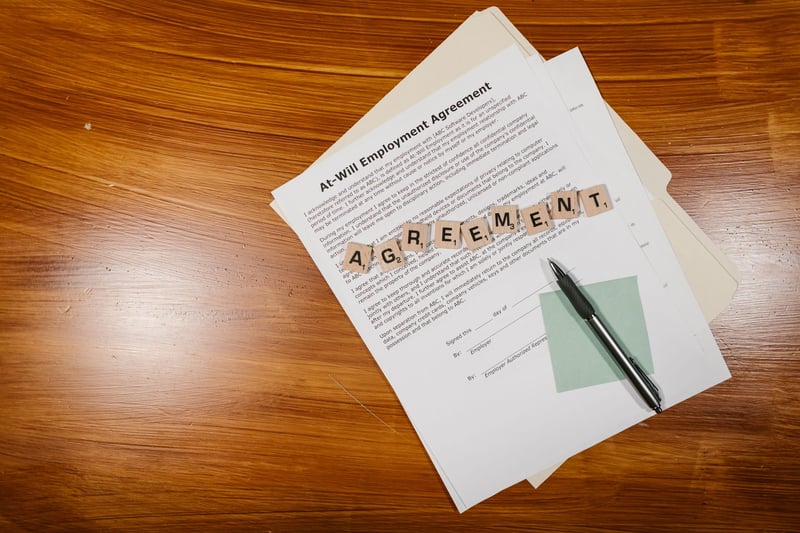
Two laws govern every employment relationship in Switzerland, and the most common mistake foreign employers make is treating them as one. The Code of Obligations (Obligationenrecht, OR, arts. 319 to 362) is the private-law contract framework: it defines the employment contract, pay, holidays, notice periods and protection against unfair dismissal. The Labour Act (Arbeitsgesetz, ArG / LTr, SR 822.11) is the public-law layer that fixes maximum working hours, rest, breaks and health protection, enforced by SECO and the cantonal labour inspectorates.
The same framework applies to all employees working in Switzerland, regardless of nationality. The practical rule to carry through this guide is the variable-versus-mandatory split: Code of Obligations defaults can always be improved on by an individual contract or by a generally binding collective labour agreement (Gesamtarbeitsvertrag, GAV), but never reduced below the floor, while Labour Act protections are a non-waivable minimum. Switzerland also has no employment-at-will, so an employer cannot simply dismiss a worker on the spot. The sections below walk the employment lifecycle, from contract to exit, with the article number behind each rule.
By the numbers
The figures that anchor this topic.
45 / 50 h
MAX WEEKLY HOURS · ARG
4 weeks
MIN PAID VACATION · OR 329A
1 to 3 mo
NOTICE BY SENIORITY · OR 335C
3 months
MAX PROBATION · OR 335B
The framework
The two laws that govern Swiss employment (OR vs ArG)
Swiss employment law is best understood as a fork. The Code of Obligations (OR) regulates the bilateral relationship between employer and employee: formation of the contract (OR 319), pay, holiday, notice and dismissal. Its defaults can be varied by the contract or a collective agreement, as long as the variation stays above the statutory floor. The Labour Act (ArG) is different in kind: it is public-law protection that imposes a mandatory ceiling on working time and a floor on rest, breaks, health and the treatment of young and pregnant workers. It is enforced by the state, not by the parties, and cannot be contracted away.
Which one wins where they meet is simple to remember: the Labour Act sets the non-negotiable minimum, and the Code of Obligations or an individual contract can only improve on it. So a contract can grant more holiday than the law requires or a longer notice period, but it can never push weekly hours above the ArG cap or strip an employee of a protected rest period. When you read any clause in a Swiss contract, the first question is which of these two laws it touches, because that decides whether the term is freely negotiable or locked by statute.
The contract
Employment contract types
The default arrangement is the individual employment contract (Einzelarbeitsvertrag, OR 319). It can be open-ended (unbefristet) or fixed-term (befristet). A fixed-term contract ends automatically on its expiry date with no notice required; an open-ended contract runs until one side gives notice. Chaining successive fixed-term contracts to dodge dismissal protection is treated by the courts as a single open-ended relationship.
Above the individual contract sit two collective instruments. A standard employment contract (Normalarbeitsvertrag, NAV) is a cantonal or federal model that sets mandatory minima in specific sectors. A collective bargaining agreement (Gesamtarbeitsvertrag, GAV) negotiated by social partners can override Code of Obligations defaults and fix sector minimum wages, holiday and notice; where it is declared generally binding it applies to every employer in the field, including foreign-owned firms. Checking sector GAV coverage is therefore a first compliance step. A contract can be oral, but key terms such as an extended probation period, a non-compete or a deviation from the default overtime treatment are only enforceable if they are in writing. The employer entity must of course exist first, which is where setting up the employing Swiss entity comes in before any hiring.
Probation
Probation period (Probezeit)
An open-ended contract begins with a probation period (Probezeit). The statutory default is one month. The parties may shorten, waive or extend it in writing, but never beyond a maximum of three months. Any extension above the default must be agreed in writing to take effect.
During probation the relationship is easier to end on either side: notice is just seven days, effective on any working day, rather than the post-probation ladder of one to three months. If actual work is interrupted during probation by illness, accident or military service, the probation period is extended by the missed days so the trial genuinely lasts its agreed length. The strong protection against dismissal at the wrong time does not yet apply in the same way during probation, which is why the trial window matters.

Working hours
Working hours, overtime and rest (Labour Act)
The Labour Act caps the working week. The maximum is 45 hours for employees in industrial undertakings, for office staff, technical and other salaried employees, and for sales staff in large retail businesses; for all other workers the ceiling is 50 hours. These are statutory maxima, not the normal week: contractual hours in Switzerland typically sit between 40 and 42. Short peak-period extensions are allowed subject to averaging rules.
Swiss law then distinguishes two kinds of extra work, and conflating them is a frequent error. Overtime (Überstunden) is work beyond the contractually agreed hours but within the legal maximum; under the Code of Obligations it is compensated by time off in lieu or, failing agreement, by a wage supplement of at least 25 percent, and a written contract can vary or exclude that supplement for many salaried roles. Excess hours (Überzeit) is work beyond the ArG weekly cap; it is public-law controlled, subject to annual limits, and the 25 percent supplement for office and technical staff cannot be contracted away in the same manner. On top of this the Labour Act mandates daily rest, a weekly rest period, and paid or unpaid breaks scaled to shift length. Accurate time tracking is both a compliance and a payroll obligation, which is why employers usually fold it into their Swiss payroll and social-insurance compliance.
Leave
Holidays, public holidays and family leave
Every employee is entitled to a minimum of four weeks of paid annual holiday under the Code of Obligations (OR 329a), rising to five weeks for employees and apprentices under the age of 20, with at least two weeks taken consecutively. Many employers and collective agreements grant five or six weeks, but four weeks is the floor that cannot be reduced, and holiday should as a rule be taken as actual time off rather than paid out.
Public holidays are set cantonally, not federally: only 1 August, the national day, is fixed across the whole country, while each canton designates the rest, typically between eight and fifteen days a year. Family leave is funded through the federal income-compensation scheme (EO): maternity leave is 14 weeks at 80 percent of salary, capped, with an eight-week ban on work after birth, and paternity leave is two weeks at 80 percent. An employer hiring foreign staff also has to line up the worker's status in parallel, which our work permit for foreign staff and residence permits in Switzerland guides cover.
Notice
Notice periods after probation
After probation, the Code of Obligations sets statutory notice periods that scale with seniority (OR 335c), each running to the end of a calendar month:
- First year of service: 1 month, to the end of a month.
- Second to ninth year: 2 months, to the end of a month.
- From the tenth year onward: 3 months, to the end of a month.
These are defaults, not fixed limits. A written contract or a collective agreement can set different periods, but only if the same period applies to both employer and employee and, after probation, it is not shorter than one month. The end-of-month timing can also be altered by agreement, so the ladder should never be presented as immutable. Termination does not need a stated reason to be valid, but the reason still matters, because an unfair motive can make the dismissal abusive even though the contract still ends.
Dismissal protection
Protection against unfair dismissal
Switzerland has freedom of termination, so either party may end the contract with notice and without stating a reason. That freedom has two hard limits. The first is the protected, or blocking, period (Sperrfrist, OR 336c): the employer may not give notice while the employee is incapacitated by illness or accident, for 30, 90 or 180 days depending on length of service, during pregnancy and the 16 weeks after birth, or during military or civil service. The rule is counter-intuitive and worth stating plainly: notice served during a protected period is void, and a notice period already running is suspended until the protection ends.
The second limit is abusive dismissal (missbräuchliche Kündigung, OR 336 / 336a). A dismissal is abusive if given for a prohibited reason, such as personal characteristics or discrimination, the exercise of a constitutional or legal right, or union membership and lawful union activity. The contract still ends, but a court can award compensation of up to six months' salary. Because the line between a lawful and an abusive dismissal turns on motive and process, a structured exit is the safe approach. Founders without a Swiss entity can have these obligations carried for them by routing a hire through company formation and payroll first, rather than improvising the exit later.

Summary dismissal
Immediate termination for good cause (OR 337)
Separate from notice-based termination, either party may end the contract with immediate effect for good cause (fristlose Kündigung, OR 337). The bar is high: only a serious breach that makes continuing the relationship unreasonable qualifies, such as fraud, theft, an outright refusal to work, or competing against the employer. Mere underperformance, a single mistake or a personality clash does not meet the standard.
Getting this wrong is expensive. An unjustified summary dismissal does not just fail; it exposes the employer to the salary that would have run over the proper notice period plus compensation of up to six months' salary. The practical discipline is to document the misconduct and, where possible, to warn before acting, so that a later challenge can be met with a clear record rather than a contested recollection.
Severance and sick pay
Severance and salary continuation
Readers routinely conflate two different entitlements, so it is worth separating them. Statutory severance (OR 339b) is mandatory only in a narrow case: employees aged 50 or over with at least 20 years of service, who receive between two and eight months' salary on departure. Outside that band there is no general statutory severance in Switzerland, although a contract or collective agreement can provide one voluntarily.
Salary continuation, by contrast, is sick pay. If an employee is prevented from working through no fault of their own, by illness, accident, pregnancy or a legal duty, the employer must continue to pay salary for a limited period once the relationship has lasted, or was agreed for, more than three months (OR 324a). The first-year minimum is three weeks; for longer service the duration follows one of the recognised cantonal scales (the Bern, Basel or Zurich scales), which lengthen continued pay with seniority. Most employers discharge this through daily-sickness-benefit insurance (Krankentaggeld), which typically pays 80 percent of salary, so the interaction between the statutory minimum and the policy terms should be spelled out in the contract.
Redundancy
Collective (mass) dismissal
When dismissals reach a certain scale for reasons unrelated to the individual employees, the collective dismissal rules apply (OR 335d to 335g). The thresholds are measured over a 30-day window and depend on company size:
- At least 10 dismissals in firms of 21 to 99 employees.
- At least 10 percent of the workforce in firms of 100 to 299 employees.
- At least 30 dismissals in firms of 300 or more employees.
Once a threshold is crossed, the employer must consult the affected employees or their representatives first, giving them a genuine chance to propose ways to avoid or reduce the layoffs, and then notify the cantonal labour office (the mass-redundancy channel reachable via arbeit.swiss). Notice cannot take effect before the consultation is complete. Larger employers may additionally have to negotiate a social plan where statutory size and redundancy thresholds are met. Because the process is procedural and time-sensitive, the sequencing matters as much as the headcount.
For employers
What this means for foreign employers (next steps)
The rules above sit on top of a setup chain that has to be in place before the first hire. In order: the employer entity must exist and be registered; it must enrol with the cantonal compensation office for AHV and the rest of the social-insurance system; payroll has to be set up to run the deductions and continued-pay obligations; and the worker's permit status has to be confirmed. Employer registration is cantonal, so for many foreign founders the chain starts with a low-tax base such as registering as an employer in Zug.
If you are still planning the structure, starting a business in Switzerland walks through incorporation and registration in the right order, and company formation handles the entity itself. When it comes to running the relationship, the duties in this guide, continued pay, working-time records, notice and the collective-dismissal process, are discharged through payroll and accounting. We work on a custom-quote basis, so talk to our team about hiring in Switzerland with the canton and the role and we will scope the compliance setup around it.
FAQ
Frequently asked questions
What is the notice period for employment in Switzerland?
Seven days during the probation period. After probation, the statutory default under the Code of Obligations (OR 335c) is one month in the first year of service, two months in years two to nine, and three months from the tenth year, in each case to the end of a calendar month.
Can an employer dismiss an employee without giving a reason?
Yes. Switzerland applies freedom of termination, so either party may end the contract with notice and without stating a reason. The dismissal must not be abusive under OR 336 and must not fall within a protected period under OR 336c.
What is the maximum legal working week in Switzerland?
The Labour Act sets a maximum of 45 hours per week for industrial workers, office and technical staff and large-retail sales staff, and 50 hours per week for all other employees.
How much paid holiday is mandatory?
Employees are entitled to at least four weeks of paid vacation per year, rising to five weeks for those under 20, with at least two weeks taken consecutively.
Is severance pay required in Switzerland?
Statutory severance under OR 339b is mandatory only for employees aged 50 or over with at least 20 years of service, at two to eight months' salary. There is otherwise no general statutory severance.
When is an employer barred from terminating?
During protected periods under OR 336c: illness or accident (30, 90 or 180 days depending on tenure), pregnancy and the 16 weeks after birth, and military or civil service. Notice given during a protected period is void.
What is abusive dismissal and what compensation applies?
An abusive dismissal is a termination for a prohibited reason under OR 336, such as discrimination, the exercise of a legal right or union membership. Compensation can be up to six months' salary under OR 336a.
How long can a probation period last?
The default probation period is one month, extendable to a maximum of three months by written agreement. Notice during probation is seven days.
What overtime premium must employers pay?
Overtime carries at least a 25% wage supplement, unless the parties agree to compensate it with equivalent time off.
When does a collective or mass dismissal trigger consultation duties?
At the OR 335d thresholds, measured over 30 days: at least 10 dismissals in firms of 21 to 99 employees, at least 10% in firms of 100 to 299, and at least 30 in firms of 300 or more. The employer must consult employees and notify the cantonal labour office.
Does Switzerland have a minimum wage?
There is no federal statutory minimum wage. A small number of cantons set their own minimum wage; elsewhere pay is fixed by the individual contract or an applicable collective bargaining agreement.
Does Swiss employment law apply to foreign employees the same way?
Yes. The Code of Obligations and the Labour Act apply to all employees working in Switzerland regardless of nationality.
Keep reading
Related guides and services.
Turn this into a Swiss plan that works.
A 30-minute call to map your structure, canton, timeline and required substance. No price-list. Every engagement is scoped on the call.