Buying property
Buying Property in Switzerland as a Foreigner: The Lex Koller Rules
Whether a foreigner can buy property in Switzerland turns on one federal law, the Lex Koller. It restricts residential purchases by persons abroad, leaves genuine commercial property largely open, and sets out narrow paths for residents and for holiday homes.
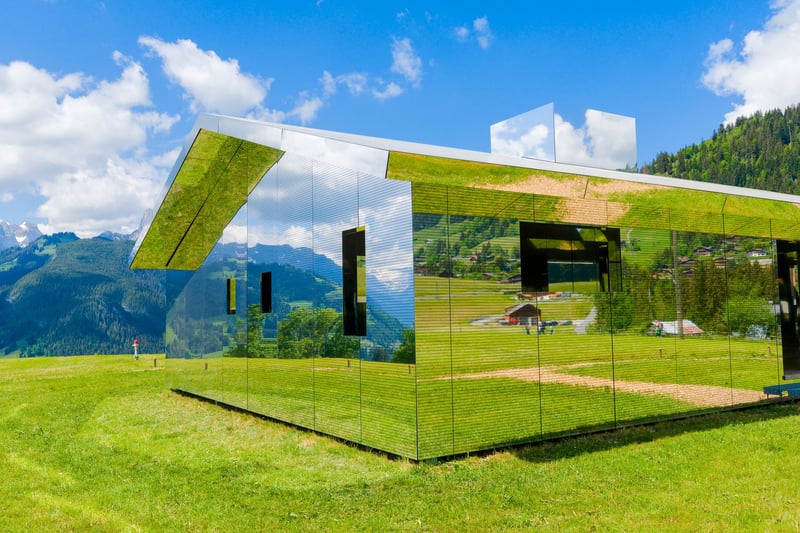
Switzerland is one of the few high-income countries that actively limits foreign ownership of housing. The rules sit in the Federal Act on the Acquisition of Real Estate by Persons Abroad (German BewG, French LFAIE, Italian LAFE), almost always called the Lex Koller after the minister who shaped it. Enacted in 1983 and in force since 1985, the Act treats residential property as a protected asset and requires many foreign buyers to obtain a cantonal authorisation before they can complete a purchase, if they are permitted to buy at all.
The practical answer depends on three things: your nationality, your residence status in Switzerland, and what kind of property you want. A settled resident buying a flat to live in is treated very differently from a non-resident investor seeking a second apartment in the Alps. This guide sets out who needs a permit, where the permit-free cases lie, how holiday-home quotas work, why buying through a company does not get around the law, and what the 2026 reform proposal would change.
By the numbers
The figures that anchor this topic.
Lex Koller
Federal Act governing foreign buyers
C permit
Status that buys permit-free
20%
Minimum equity for residents (typical)
17
Cantons with a holiday-home quota · BewV
The short answer
Can a foreigner buy property in Switzerland?
Yes, but it depends on who you are and what you want to buy. Acquisition of residential property by a person abroad needs an authorisation under the Lex Koller, while residents with the right permit buy much like Swiss citizens. The deciding factor is whether you count as a person abroad under the Act, which turns on residence and nationality rather than on how much you are willing to pay.
As a quick self-check by buyer type: a foreign national with a C settlement permit buys residential property freely; an EU or EFTA national legally resident in Switzerland, on a B permit for example, is not a person abroad and buys like a Swiss resident; a third-country national on a B permit can buy a main home where they live; and a non-resident is generally limited to a holiday home in a designated tourist area, within quota. Commercial and business premises sit largely outside the restriction, which matters for entrepreneurs. The hard limits bite on housing, in particular on second homes and buy-to-let residential property held by people who do not live in Switzerland.
The law
What is Lex Koller?
The Lex Koller is the Federal Act on the Acquisition of Real Estate by Persons Abroad (BewG; French LFAIE, Italian LAFE). Enacted in 1983 and in force since 1985, its purpose is to limit foreign acquisition of Swiss residential land and to protect housing stock from speculative foreign demand. Where the Act applies, a purchase of residential property requires a permit, and acquiring restricted property without that permit is void, with the authorities able to order restoration of the original position. Because the consequences are severe, the status check has to happen before any deed is signed.
Enforcement is split between the federal level and the cantons. The Federal Office of Justice supervises how the Act is applied, but the cantons run the actual authorisation procedure and issue or refuse the permits. That federal-cantonal split is why outcomes vary from place to place: each canton sets its own holiday-home quota and applies the conditions on the ground.
One law is frequently confused with another. Lex Koller is not Lex Weber. Lex Koller controls who, as a foreigner, may acquire property. Lex Weber is the separate second-home initiative that caps second residences at 20 percent of a municipality's housing stock and applies to everyone, Swiss and foreign alike. A purchase can touch both regimes, but they answer different questions.
Who qualifies
Who can buy without authorisation, and who cannot
The core distinction is between buyers who are treated like Swiss citizens and those who count as persons abroad. Buyers who can acquire residential property without a Lex Koller authorisation include:
- Holders of a C settlement permit, of any nationality, who are treated like Swiss residents for these purposes and can buy a home freely.
- EU and EFTA nationals legally and actually resident in Switzerland, for example on a B permit, who are not persons abroad under the Act (BewG art. 5) and can buy any property, including a second home or a residential investment.
- Any natural person buying their main home at their lawful and actual place of residence, which covers a third-country national living in Switzerland on a B permit (BewG art. 2 para. 2 lit. b).
- Anyone, for genuine commercial premises used as a permanent business establishment, whatever the buyer's nationality or residence (BewG art. 2 para. 2 lit. a).
Buyers who do need authorisation include non-resident foreign nationals, EU or EFTA nationals who do not live in Switzerland, and third-country nationals living in Switzerland without a C permit for anything beyond their own main home. A non-EU national on a B permit sits in a special position covered in the matrix below: one home for their own use. If you already live and work in Switzerland, your permit category is therefore the first thing to establish, and our Swiss residence permit guide explains how each status is acquired.
The matrix
Permit and property-type matrix
The cleanest way to read the rules is to cross your status against the type of property. The table below sets out the position under the BewG; the residential cells are where most mistakes happen.
| Buyer | Primary home | Holiday home | Residential investment | Commercial |
|---|---|---|---|---|
| Swiss / C permit | Yes | Yes | Yes | Yes |
| EU/EFTA resident, B permit | Yes | Yes | Yes | Yes |
| Non-EU resident, B permit | One, live-in only | With permit, tourist zone | No | Yes |
| Non-resident | No | With permit, tourist zone | No | Yes |
The non-EU B-permit rule, spelled out: a third-country national on a B permit may buy, without authorisation, the home that serves as their main residence at their lawful and actual place of residence (BewG art. 2 para. 2 lit. b; BewV art. 5). The relief is owner-occupation relief, not an investment route: a second flat, a buy-to-let or a home in another town needs an authorisation that the Act does not grant for investment.
Can Americans (and other non-EU nationals) buy? Yes, on the same logic. A US, UK or other non-EU national with a C permit buys freely; on a B permit, one live-in home only; and as a non-resident, a holiday home in a tourist canton within quota. Nationality outside the EU/EFTA does not bar ownership, it simply routes you to the stricter rows.
Holiday homes
Buying a holiday home in a tourist canton
The most common route for a non-resident is the holiday home, and it is the most tightly controlled. Purchases are only possible in places the canton has designated to promote tourism (BewG art. 9 para. 3), and only within an annual quota. The Federal Council sets the national maximum at 1,500 authorisations a year, the ceiling the Act allows, and splits it into cantonal quotas (BewG art. 11; BewV Annex 1). The largest are Valais 330, Graubünden 290, Ticino 195, Vaud 175 and Bern 140; Lucerne, Schwyz and Fribourg have 50 each, St. Gallen 45, Neuchâtel 35, and Uri, Obwalden, Nidwalden, Glarus, Appenzell Ausserrhoden, Schaffhausen and Jura 20 each. Unused units carry over to the next year, and popular alpine and lakeside resorts use their allocation quickly.
Holiday-home permits also come with conditions on the property itself. The net living area may as a rule not exceed 200 square metres, and for a holiday home that is not a condominium unit the plot may as a rule not exceed 1,000 square metres (BewV art. 10). The buyer, their spouse or registered partner and their children under 18 may own only one such home in Switzerland (BewG art. 12 lit. d), and the permit carries a ban on letting the property all year round (BewV art. 11). The 17 cantons with a quota include Valais, Graubünden, Ticino, Bern and Vaud. You can see the wider picture in our cantonal overview; note that low-tax business cantons such as Zug are not tourist-zone cantons, so the holiday-home route does not apply there.
Commercial property
Commercial and business property: the Lex Koller exemption
The Lex Koller is a housing law. Real estate that serves a permanent business establishment, an office, a workshop, a hotel run as a going concern, a retail unit or a logistics site, is in principle freely acquirable by foreign buyers, including foreign-controlled companies, with no authorisation needed. The restriction is aimed at residential stock, not at productive commercial assets.
What counts is genuine business use. The exemption covers premises that a business actually operates from or that form part of its permanent establishment. It does not cover residential property dressed up as a commercial holding, and where a building mixes uses, the residential element can still bring the purchase within the Act. The line between a real business establishment and disguised residential investment is exactly where the cantonal authorities look closely, so mixed-use deals need a careful classification before completion.
Structuring
Buying through a Swiss company or holding structure
A frequent assumption is that a foreign investor can sidestep the restriction by having a Swiss company buy the home. The Act anticipates exactly this through an anti-circumvention rule. If a foreign-controlled company acquires residential property, or if foreign persons acquire a controlling interest in a company that owns restricted property, the transaction is treated as an acquisition by a person abroad and needs the same permit. Financing arrangements that put a foreign lender in a dominant position can be caught as well. The law looks through the structure to who really controls the asset, so corporate ownership does not unlock residential property the buyer could not own directly.
Where a structure genuinely works is commercial real estate. A Swiss operating company can own the premises it trades from, and a foreign group can hold Swiss business property through a local entity without authorisation. That is a normal reason to form a Swiss company, and investors building a property-holding platform for commercial assets often use a holding structure to consolidate ownership. The key is that the structuring follows the commercial exemption, rather than trying to defeat the residential restriction.
Financing
Financing: mortgages, equity, and what non-residents pay
Swiss lenders are conservative. A residential mortgage is typically capped at around 80 percent of the property value, so a resident buyer must bring at least 20 percent as equity. At least half of that equity, around 10 percent of the price, is usually expected to be genuine cash or pillar 3a savings rather than pledged occupational-pension (pillar 2) assets. Lenders also apply an affordability test: the imputed running costs of the property, calculated at a notional long-term interest rate well above current market rates, should not exceed roughly a third of gross income.
Non-resident and foreign buyers face stricter terms. Many banks do not lend to non-residents at all, and those that do set a markedly higher equity requirement under their own credit policy. Pillar 3a savings can count toward a resident's equity. Ongoing ownership costs, taxes and maintenance also feed into the wider budget, which the financing plan should account for from the outset.
Costs and process
Costs and the purchase process
A Swiss property purchase is a formal, public process. The sale contract must be executed as a notarial deed before a notary, and ownership only passes when the transfer is entered in the cantonal land register (Grundbuch). Where a Lex Koller permit is required, it has to be in place for the registration to proceed. On top of the price, buyers should budget transaction costs of roughly 3 to 5 percent: a property-transfer tax (Handänderungssteuer) in many cantons, notary fees of around 0.2 to 1 percent, and land-register charges. These vary significantly between cantons, with some levying little or no transfer tax and others charging a few percent, so the canton where the property sits sets the actual figure.
The steps run in a predictable sequence: agree terms and sign a reservation; carry out due diligence and arrange financing; obtain the Lex Koller permit if one is needed; sign the notarial deed of sale; and complete with the land-register entry that transfers ownership. From an accepted offer to handover, a clean purchase usually takes around two to three months, longer where an authorisation has to be granted first.
Ongoing tax
Taxes you will owe as a property owner
Owning Swiss property brings recurring tax obligations. Owner-occupiers are taxed on an imputed rental value (Eigenmietwert), a notional rent added to taxable income to reflect the benefit of living in your own home, against which mortgage interest and maintenance are generally deductible. The property's net value also enters the cantonal wealth tax base; in 2026 the top marginal wealth-tax rate in the cantonal capitals runs from 0.12 percent in Stans to 0.86 percent in Geneva.
When you sell, a gain is taxed under the cantonal real-estate capital-gains tax (Grundstückgewinnsteuer), which is typically tapered by holding period so that short holds are taxed more heavily than long ones. Note an important point of confusion: the Swiss exemption for private capital gains on movable assets such as shares does not extend to real estate, which is always caught by this separate cantonal tax. Our Swiss wealth tax guide explains how property sits in your taxable wealth alongside the rest of your assets.
Reform tracker
The 2026 Lex Koller revision: what may change
Last reviewed: October 2026.
The Federal Department of Justice and Police put a tightening of the Lex Koller out to consultation from 15 April to 15 July 2026, implementing measures the Federal Council decided when it rejected the sustainability initiative (Keine 10-Millionen-Schweiz). The consultation has closed, and as of October 2026 the Federal Council has not yet adopted its message to Parliament, so the current law above still applies. The preliminary draft would:
- make a third-country national's purchase of a main home subject to authorisation, granted for a single dwelling unit, with a duty to sell within two years once it is no longer the buyer's main home;
- keep business premises free of authorisation but require a sale within two years if they stop being used as a permanent establishment, and treat a conversion from business to residential use as an acquisition;
- cut the national holiday-home quota from 1,500 to 750 units, and count resales between foreign owners against the quota;
- bring shares in listed residential property companies, units in property funds and shares in property SICAVs within the Act, with stock-exchange participants required to check the buyer's status;
- let cantons allow foreign-controlled hotels to acquire staff housing (Motion 22.4413).
If you are timing a purchase, these items are a planning risk until Parliament has decided.
How we help
How we help foreign buyers
Most problems on a Swiss property purchase come from getting the status and classification wrong at the start, not from the conveyancing itself. We run the Lex Koller analysis up front: confirming whether you count as a person abroad, classifying the property as primary home, holiday home or commercial premises, and identifying whether a cantonal authorisation is needed before any deed is signed. For investors, we structure commercial acquisitions correctly so the exemption holds, and we flag where a residential element would pull a deal back inside the Act.
If your move to Switzerland is still being planned, the residence question usually comes first, because the right permit is what unlocks a permit-free purchase. Our relocation and permit support and legal services teams run the permit and Lex Koller checks together, and we work on a custom-quote basis. Tell us your nationality, intended residence status and the type of property, and we will scope it. To get started, talk to a specialist.
FAQ
Frequently asked questions
Can a foreigner buy property in Switzerland?
Yes, but acquisition by persons abroad requires authorisation under Lex Koller; residents with a C permit, or EU/EFTA nationals with a B or C permit, buy like Swiss citizens. Non-residents are largely limited to holiday homes in designated tourist areas, and commercial premises are generally unrestricted.
What is Lex Koller?
Lex Koller is the Federal Act on the Acquisition of Real Estate by Persons Abroad (BewG), in force since 1985, which restricts foreign acquisition of Swiss residential land. The Federal Office of Justice supervises it, while the cantons run the authorisation procedure.
Can a non-resident buy a home in Switzerland?
Generally only a holiday home in a designated tourist area, within the cantonal quota and the federal size limits of, as a rule, 200 square metres of net living area and a 1,000 square metre plot. Ordinary residential investment property is barred for non-residents.
Does a B permit let me buy a house?
A non-EU B-permit holder may buy, without authorisation, the home that serves as their main residence where they live, but not a second home or an investment property. EU/EFTA nationals resident in Switzerland on a B permit are not persons abroad and buy any property like Swiss residents.
Do C-permit holders face Lex Koller restrictions?
No. C settlement permit holders, of any nationality, buy residential property without Lex Koller authorisation and are treated like Swiss residents for this purpose.
Can foreigners buy commercial property in Switzerland?
Yes. Commercial and business-establishment real estate is exempt from Lex Koller authorisation, including for foreign-controlled companies, provided the use is genuine business use rather than disguised residential investment.
Can I buy Swiss property through a company?
A foreign-controlled company is treated as a person abroad for residential land, so the same restrictions and permit apply under an anti-circumvention rule. Commercial property held for genuine business use is generally exempt, which is why company ownership is a normal route for commercial real estate.
How much deposit do I need to buy property in Switzerland?
Residents need a minimum 20 percent equity, of which at least 10 percent of the price must be hard equity rather than pledged occupational-pension assets. Many banks do not lend to non-residents; those that do require markedly more equity under their own credit policy.
What does buying property cost beyond the price?
Transaction costs of around 3 to 5 percent of the price in total: a property-transfer tax in many cantons, notary fees of roughly 0.2 to 1 percent, and land-register charges, varying widely by canton. Some cantons levy little or no transfer tax, so the canton where the property sits sets the figure.
How long does the purchase take?
Usually two to three months from an accepted offer to handover, via a notarised deed and a land-registry entry. It takes longer where a Lex Koller authorisation has to be granted before completion.
Which cantons let foreigners buy a holiday home?
The 17 cantons with a federal holiday-home quota, led by Valais (330 a year), Graubünden (290), Ticino (195), Vaud (175) and Bern (140), within a national maximum of 1,500 (BewV Annex 1). Purchases are possible only in places the canton has designated for tourism, and popular resorts use their allocation quickly.
Is Lex Koller changing?
A preliminary draft went to consultation from 15 April to 15 July 2026. It would require authorisation for third-country nationals buying a main home, with a two-year resale duty once it is no longer their main home, and would halve the holiday-home quota to 750. As of October 2026 it is not law, and the Federal Council has not yet sent a message to Parliament.
Keep reading
Related guides and services.
Turn this into a Swiss plan that works.
A 30-minute call to map your structure, canton, timeline and required substance. No price-list. Every engagement is scoped on the call.