Relocation
Relocating to Switzerland: A Founder’s Practical Guide
Relocating to Switzerland runs on a fixed sequence gated by your nationality. EU and EFTA citizens move under free movement; third-country nationals, including UK, US and Nigerian movers, need a permit and a quota place first. This pillar guide sets out the order, the two hard deadlines, and where each step has its own detailed guide.
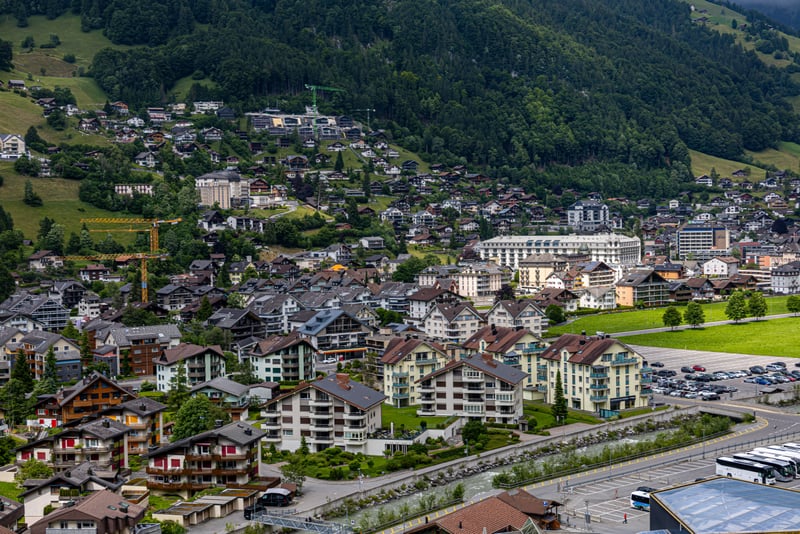
Relocating to Switzerland is less a single application than a set of steps that must happen in the right order and within fixed deadlines. The first fork is nationality. If you hold the passport of an EU or EFTA member state, free movement applies and the process is registration-based. If you come from a third country, and since 1 January 2021 that includes the United Kingdom, residence and work are granted only within annual federal quotas after a labour-market check. Get that gate right and the rest of the move, registration, health insurance, housing, banking and tax, follows a predictable path.
This guide is the overview for foreigners and founders. It walks the sequence end to end, flags the two deadlines that catch newcomers out, the fourteen days to register at your commune and the three months to take out health insurance, and links down to the deeper guides where each topic has its own rules. Quotas and tax thresholds are given for 2026, the year they apply to.
By the numbers
The figures that anchor this topic.
14 days
To register at your commune after arrival
3 months
To take out mandatory health insurance
90 / 180
Days you may stay visa-free under Schengen
CHF 120,000
Gross salary from which you file a return
The eligibility gate
Who can relocate to Switzerland: EU/EFTA vs third-country
Almost everything about your move depends on your nationality, so settle this question first. Citizens of an EU or EFTA member state benefit from the Agreement on the Free Movement of Persons. They may enter Switzerland, live there and take up employment or self-employment, and need only register with the cantonal authorities once they intend to stay longer than three months. The permit they receive largely confirms a right they already hold.
Third-country nationals, including UK, US and Nigerian movers, face a different regime. Residence and work are granted only within annual federal quotas, and an employer or self-employed founder must show a genuine economic interest to Switzerland. Approval involves both the cantonal labour-market authority and the State Secretariat for Migration (SEM), and the realistic timeline is several months. For short visits before any move, the Schengen short-stay rule lets most non-residents spend 90 days in any 180-day period without a permit, counting entry and exit days. Our guide to the Swiss residence permit types (L, B, C, G) breaks the categories down in full.
The permit ladder
The Swiss permit ladder at a glance: L, B, C and G
Swiss residence permits come in four headline categories, and knowing which one fits decides your timeline and your renewal duties.
- L permit, short-term residence, is tied to short assignments and contracts; work expected to exceed a few months usually needs a longer permit.
- B permit, initial renewable residence, is the standard annual permit tied to work, renewed yearly and, for third-country nationals, subject to the federal quota.
- C permit, settlement, generally follows about ten years of continuous legal residence, reduced to five for US and Canadian nationals under bilateral agreements, and frees you from most work-permit ties.
- G permit, cross-border commuter (Grenzgänger), is for people who live in a neighbouring country and return regularly, not for movers.
Family reunification rights attach to most of these categories on conditions. If your permit file is complex, our migration support service handles the application and the economic-interest test, and the dedicated residence permit guide covers the documents a cantonal migration office expects.
Founder vs employee
Relocating as a founder vs as an employee
Most relocation advice assumes you arrive with a job offer, where the employer applies for the permit and carries the labour-market case. That is the majority path and the simplest one. Founders and self-employed movers take a different route, and it is the one few pages explain.
Owning or founding a Swiss company does not by itself grant a right to live there. A self-employed third-country national must demonstrate, under the self-employment provisions of the Foreign Nationals and Integration Act, that the business serves a lasting economic interest to Switzerland: local revenue, Swiss customers, jobs created. Incorporating an AG needs CHF 100,000 of share capital and a GmbH CHF 20,000, but capital alone is not the test. Physically relocating to run the company also strengthens its substance, the real management and decision-making in Switzerland that tax authorities look for. If setting up the entity is part of your move, our company formation service runs the incorporation in parallel with the permit file.
The checklist
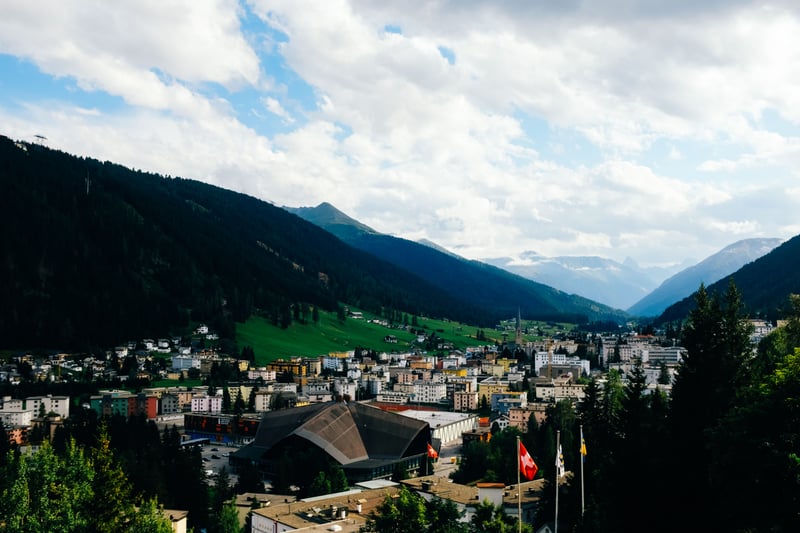
Your first 90 days: the relocation checklist
Once your permit is approved, the first three months are a sequence of deadlines. A clean arrival runs roughly in this order:
- Days 1 to 14: register in person at your commune (Anmeldung), before your first day of work.
- Within the first weeks: collect your residence-permit card once the migration office issues it.
- Within 3 months: take out compulsory KVG/LAMal health insurance, which then backdates to your arrival date.
- In parallel: secure housing, open a bank account, set up utilities, and arrange school places for children.
The housing, banking and registration steps interlock, and the order is not always obvious, which is why newcomers stall on the banking and address loop described below. Treat the fourteen-day and three-month deadlines as firm; everything else flexes around them.
Step: registration
Registering at your commune (Anmeldung) within 14 days
You must register at your commune within fourteen days of arriving, and before you start work. This is the deadline newcomers most often miss. You register in person at the residents’ registration office of your commune, the Einwohnerkontrolle, Contrôle des habitants or Controllo abitanti depending on the language region, which records your residence, activates your permit and notifies the tax and social-security systems.
Bring your passport or ID, your employment contract or proof of self-employment, your tenancy agreement or proof of address, passport photos and, where relevant, your visa approval and family certificates. It helps to keep the three authority layers straight: the commune (Gemeinde) handles local registration, the cantonal migration office (Migrationsamt) issues the permit card, and the federal SEM sets the overarching rules and quotas. If you later move to a new address, even within Switzerland, you de-register and re-register within the same short window.
Step: insurance
Health insurance: the 3-month compulsory deadline
Basic health insurance is compulsory and must be arranged within three months of taking up residence. Switzerland has no state health service. Cover under the Federal Health Insurance Act, KVG in German and LAMal in French, is mandatory for everyone resident in the country, and if you sign up on time it backdates to your arrival date, so a late start does not save you the premiums for the intervening weeks.
Basic cover is sold by private insurers, but the benefit catalogue is fixed by law, so insurers compete on premium and service rather than on what is covered. Supplementary insurance, for private hospital rooms or wider treatment choice, is optional and individually underwritten. Premiums vary by canton, age and the deductible you choose, and they are paid per person, including children, so each family member needs their own policy. Miss the three-month window and the canton can auto-assign an insurer and add a surcharge, while cover still backdates to your residence start.
Step: housing
Finding housing and the rental deposit
Switzerland is a nation of renters, and the rental market in the economic centres is tight. To win a flat you assemble a tenant dossier: a debt-collection register extract, references, pay slips or proof of income, and a copy of your permit. Scarcity, not affordability alone, is the recurring frustration newcomers describe, so apply quickly and present a complete file.
On signing, landlords ask for a security deposit of at most three months’ net rent under Article 257e of the Code of Obligations. The money goes into a blocked tenant-deposit account, a Sperrkonto, opened in your name; it earns interest and is returned at the end of the tenancy, and the landlord has a limited window to raise any claim against it. Many newcomers rent before they buy, partly because of these hurdles and partly because purchase is constrained for non-residents under the Lex Koller; our guide to buying property in Switzerland as a foreigner covers that route.
Step: banking
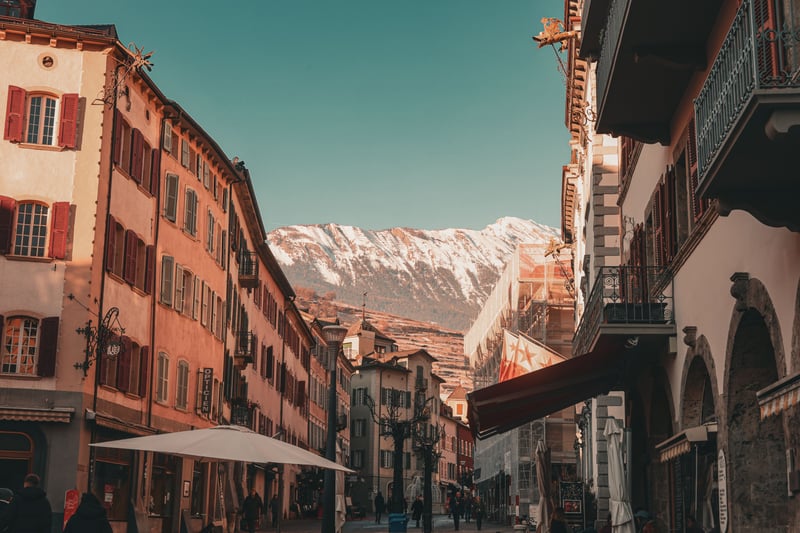
Opening a Swiss bank account
A local account makes salary, rent, premiums and everyday spending workable. Most banks open a personal account once you are 18, hold a residence permit and have a Swiss address, and they will ask for your passport, your permit, proof of address and, under banking due-diligence rules, an explanation of the source of your funds. Founders relocating alongside a company will usually need a personal account, a corporate account, and the capital-deposit account used to pay in share capital at incorporation.
The catch is a chicken-and-egg loop: your permit needs an address, your address needs a tenancy deposit, and the deposit account needs banking, all while some banks want the permit card before they open anything. The usual workaround is to register at your commune first, use that confirmation and your passport to open a basic account, then complete the housing deposit. Our guide to opening a Swiss bank account sets out the documents and the sequencing in detail.
Step: tax
Tax registration: source tax vs filing a return
Switzerland taxes at three levels, federal, cantonal and communal, and your position is set by where you live. Most foreign residents who do not yet hold a C settlement permit are taxed at source: the employer withholds wage tax, Quellensteuer or impôt à la source, from each salary payment and remits it to the canton, with the tariff varying by canton. Below the ordinary-assessment threshold there is no filing obligation, although you may apply by 31 March of the following year for an ordinary assessment, for example to claim deductions.
Once your gross salary reaches CHF 120,000 in a tax year, or you hold a C permit, you file an ordinary return like a Swiss citizen. You are generally a Swiss tax resident after 30 days if gainfully employed, or 90 days if not, and a 35 percent anticipatory tax applies to Swiss investment income, reclaimable on filing. Self-employed founders file in the ordinary way. Non-working wealthy movers can in some cantons negotiate expenditure-based taxation; our guide to lump-sum (expenditure-based) taxation explains where it is still offered. For complex cross-border cases, an advance tax ruling confirms the treatment before you commit.
Canton choice
Choosing your canton: tax and lifestyle trade-offs
Because cantonal and communal rates differ widely, the choice of canton, and even commune, materially affects your tax bill and your daily life. Three cantons dominate the relocation conversation, each for a different reason.
- Zug carries one of the lowest combined corporate tax burdens in Switzerland, an effective rate of 11.71 percent in 2026 in the city of Zug, and is the anchor for holding and crypto structures relocating their substance.
- Zurich is the largest economy, with the deepest job market, the best international connectivity and a wide choice of schools, which suits employees relocating to Zurich, Switzerland for work.
- Geneva is French-speaking and international, home to NGOs and global bodies, and a natural base for those relocating to Geneva, Switzerland who want an international, English-friendly environment.
Weigh tax against jobs, language, schools and commute rather than chasing the headline rate alone, because the cheapest canton on paper is not always the right place to live and work.
Step: schooling
Schooling for relocating families
If you are relocating with a family, schooling deserves early attention because it shapes where you choose to live. Schooling is compulsory from about age four to fifteen, and state schools are free for all residents regardless of nationality, well regarded, and organised by canton and commune. The catch is the language of instruction, which follows the local region, German, French or Italian, so the move is also a fast route to integration for younger children but a steeper change for teenagers.
International and bilingual private schools cluster in the larger cities and the expatriate hubs, offering English-medium and international-baccalaureate pathways at fees that can reach around CHF 35,000 a year. They suit families who move frequently or want continuity in an English curriculum. Because admission, waiting lists and catchment areas vary by commune, line up school places in parallel with your housing search rather than after it.
Cost reality
Cost of living: a realistic picture
The honest part of any relocation is the cost. Switzerland is among the most expensive countries in the world to live in: rent, health-insurance premiums, food and services all sit well above the UK or US equivalents. A one-bedroom city-centre flat can run materially higher than in a comparable British city, premiums are charged per person, and groceries and eating out feel steep at first.
The counterweight is salary. Swiss gross pay is high, social charges are comparatively low, and a permanent resident population of 9.13 million at the end of 2025, 27.7 percent of them foreign nationals, has built a deep, well-paid labour market, so net purchasing power is more balanced than the headline prices suggest. Switzerland is not cheap, but for many movers the numbers work. For a fuller breakdown of rent, insurance and everyday costs, see our guide to the real cost of living in Switzerland.
Origin-specific
Relocating from the UK, US or Nigeria: third-country specifics
Three origins illustrate how the third-country route plays out in practice. From the UK, British citizens have been third-country nationals since 1 January 2021, so a move now means an employer-sponsored permit and a place within the annual quota rather than the free movement that applied before Brexit. For 2026 the Federal Council has set aside 2,100 B permits and 1,400 L permits for UK nationals, released in quarterly tranches, and UK nationals, like US and Canadian nationals, can be granted a C permit after five years. From the US, the route is also employer-sponsored or via your own entity, with the helpful nuance that US and Canadian nationals can obtain a C settlement permit after five years rather than ten, while the US worldwide-taxation system and the Switzerland-US tax treaty need coordinating.
From Nigeria and other non-treaty third countries, the standard quota route applies: an employer-sponsored permit or a self-employed founder case, plus a national visa step at a Swiss representation before travel. In every third-country case the economic-interest test and the quota are the real gatekeepers, so a strong file and early timing matter more than nationality alone. Where naturalisation is the long-term goal, our guide to becoming a Swiss citizen shows how residence years convert into a C permit and, in time, citizenship.
FAQ
Frequently asked questions
How long do I have to register at my commune after moving to Switzerland?
Within fourteen days of arrival, and before your first day of work, you must register in person at your commune (Gemeinde). You bring your passport, employment contract or proof of self-employment, tenancy agreement or proof of address, photos and any visa approval. Registration activates your permit and notifies the tax and social-security systems.
When must I take out Swiss health insurance?
Within three months of taking up residence. If you sign up on time, basic KVG/LAMal cover backdates to your arrival date, so you are insured from day one. If you miss the deadline, the canton can auto-assign an insurer and add a possible surcharge, while cover still backdates to your residence start. Each person needs their own policy, including children.
Can a UK citizen move to Switzerland after Brexit?
Yes, but as a third-country national since 1 January 2021. A British mover now needs a residence and work permit and, as a non-EU national, a place within the annual federal quota, usually through an employer-sponsored application or a self-employed founder case. The free movement that applied before Brexit no longer covers UK citizens.
What is the difference between a B and a C permit?
A B permit is renewable residence tied to work, renewed annually and, for third-country nationals, subject to the federal quota. A C permit is settlement, generally granted after about ten years of continuous legal residence, reduced to five years for US and Canadian nationals under bilateral agreements, and it frees you from most work-permit ties.
How much can a landlord charge as a deposit?
A maximum of three months’ net rent, held in a blocked tenant-deposit account (Sperrkonto) opened in your name under Article 257e of the Code of Obligations. The deposit earns interest and is returned at the end of the tenancy, and the landlord has only a limited window to raise any claim against it.
Do I pay tax at source or file a return?
Most foreign residents without a C permit are taxed at source: the employer withholds wage tax (Quellensteuer) from each salary payment. Once your gross salary reaches CHF 120,000 in a tax year, or you hold a C permit, you file an ordinary annual return. Self-employed founders always file in the ordinary way and pay tax on assessed income.
Is public school free for foreign children?
Yes. State school is compulsory from about age four to fifteen and is free for all residents regardless of nationality. Teaching follows the local cantonal language, German, French or Italian, which aids integration but can be a steeper change for teenagers. English-medium international schools exist in the cities and can cost up to around CHF 35,000 a year.
How long can I stay in Switzerland without a permit?
For most non-residents, 90 days in any 180-day period under the Schengen short-stay rule, counting entry and exit days. That allows house-hunting, interviews and planning trips, but living or working in Switzerland requires the appropriate residence and, for third-country nationals, work permit.
Do I need a job offer to relocate?
Third-country nationals usually need an employer-sponsored permit, with the employer carrying the labour-market case. Founders and the self-employed instead relocate through their own entity or the self-employment route, demonstrating a lasting economic interest to Switzerland. EU and EFTA citizens need neither, as free movement lets them register and look for work.
Can I open a Swiss bank account before I arrive?
Often not fully: many banks want a residence permit or a local address before opening an account. A passport and evidence of the source of your funds are always required under due-diligence rules. The common approach is to register at your commune first, open a basic account on that confirmation, then complete your housing deposit and any corporate accounts.
How much money do I need to move to Switzerland?
Plan for up to three months’ net rent as a deposit, your first health-insurance premiums, and proof of funds for the permit and tenancy. Cost of living is materially higher than the UK or US, though high Swiss salaries offset much of it. Budget a buffer for the first months while accounts and salary settle.
Can I become a Swiss citizen after relocating?
Yes, in time. After the required years of residence and a C settlement permit, you can apply for naturalisation through the ordinary route, subject to integration and language conditions set at federal, cantonal and communal level. Our Swiss citizenship guide sets out how residence years convert into a C permit and eventually citizenship.
Keep reading
Related guides and services.
Turn this into a Swiss plan that works.
A 30-minute call to map your structure, canton, timeline and required substance. No price-list. Every engagement is scoped on the call.