Cost of living
Cost of Living in Switzerland 2026: A Realistic Breakdown
Switzerland is genuinely expensive, but the headline prices sit against some of the highest net salaries in the world, and the canton you pick changes the maths as much as any other decision. This guide gives the honest numbers, the system behind them, and what they mean for a move.
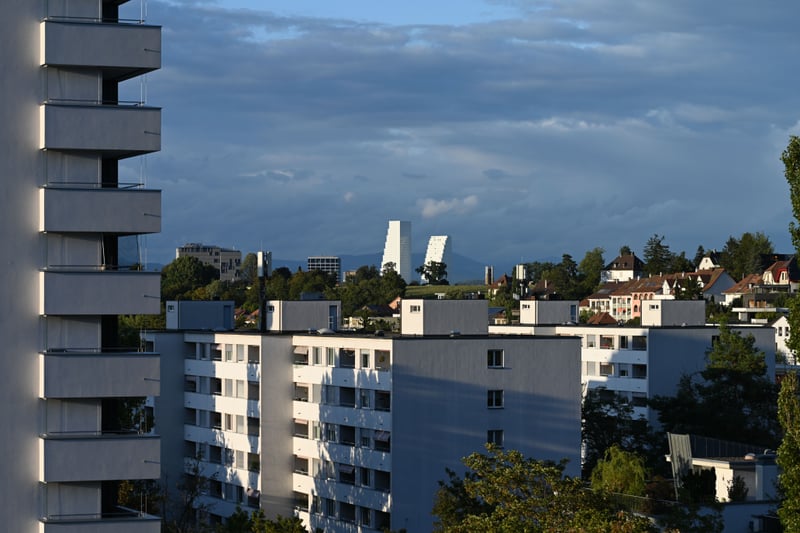
Switzerland regularly tops international cost-of-living rankings, and Zurich and Geneva rank among the priciest cities anywhere. The consumer prices in this guide are Numbeo figures as of October 2026, health-insurance data comes from the Federal Office of Public Health (FOPH) and wages from the Federal Statistical Office (BFS).
What the rankings rarely capture is the other side of the ledger. Swiss net salaries are also among the highest anywhere, VAT is low by European standards, and income tax in a canton like Zug is a fraction of what most newcomers expect. The right way to read the cost of living in Switzerland is net, after rent, mandatory insurance and tax, and canton by canton, which is exactly how this breakdown is structured.
By the numbers
The figures that anchor this topic.
CHF 1,378
Single person / month · excl. rent · Numbeo, Oct 2026
CHF 1,646
One-bed city centre / month · Numbeo, Oct 2026
+4.3%
Mean health premium rise · 2026 · FOPH
CHF 7,024
Median gross wage / month · BFS 2024
The headline number
The headline number, in context
How much does it cost to live in Switzerland per month? A single person spends CHF 1,378 a month excluding rent, and a family of four CHF 5,057 a month excluding rent, according to Numbeo data as of October 2026. Rent is added on top of those figures, which is why housing gets its own section below. The average net monthly salary in the same dataset is CHF 5,884, which is the number that makes the costs bearable.
The honest one-liner: Switzerland is expensive, but it is expensive against high net pay, low VAT and, in the right canton, modest income tax. So the answer to "is the cost of living high in Switzerland" is yes in absolute terms, and far more nuanced once salary and canton are in the picture.
What the indexes measure (and what they leave out)
Most cost-of-living indexes quote an "excluding rent" figure and a separate "with rent" figure. The excluding-rent number covers food, transport, utilities, leisure and the like, but not your largest single cost. If you budget from the excluding-rent figure alone you will badly under-plan, so add a realistic rent line for your city on top.
Rent
Rent: the dominant budget line
Rent is the biggest variable in any Swiss budget and the line you most fear before moving. Switzerland is a renter-majority country, with home ownership low, so rent dominates household spending in a way it does not in many neighbouring states. On Numbeo's national averages as of October 2026, a one-bedroom flat costs CHF 1,646 a month in the city centre and CHF 1,333 outside it, while a three-bedroom flat costs CHF 2,871 in the centre and CHF 2,347 outside.
City spread matters more than the national average. On the same Numbeo data, a one-bed in the centre is CHF 2,467 in Zurich and CHF 2,321 in Geneva, but CHF 1,551 in Bern and CHF 1,409 in Lugano. Expect a deposit of up to three months' rent, and budget time for the search because vacancy rates in Zurich and Geneva are very low.
Why rent is the line you most control by location
Of all the cost categories, rent is the one where your choice of city and canton makes the largest difference. A one-bed in central Zurich costs 59 percent more than the same flat in central Bern, which is why the city and canton section below is where most of the budget is actually won or lost.
Health insurance
Mandatory health insurance: the cost most guides under-explain
Switzerland has no employer-provided or general state health cover in the usual sense. Every resident must buy basic health insurance (KVG / LAMal) within three months of arrival, and each adult pays an individual premium. For 2026 the mean premium across all insured people rose by 4.3 percent, according to the Federal Office of Public Health, after a forecast of 4.4 percent when premiums were approved in September 2025.
What basic cover (KVG/LAMal) includes and why it is compulsory
Basic cover is a legally defined package every insurer must offer at the same scope: it pays for medically necessary treatment, hospital care in your canton of residence and prescribed medicines. Crucially it is a fixed per-person cost that sits outside your rent and outside the income-tax wedge, and it is not linked to your salary, so a higher wage does not raise it. A family of four insures four people, with children on lower premiums.
How premiums vary by canton and by deductible choice
Premiums are priced by canton, premium region and age group (children, young adults aged 19 to 25, and adults from 26), so the same cover costs noticeably more in some cantons than others. Adults also choose an annual deductible (franchise) between CHF 300 and CHF 2,500: a higher deductible lowers your monthly premium in exchange for paying more out of pocket if you actually need care. Choosing canton and deductible together is one of the few real levers you have over this fixed cost.
Everyday costs
Food, transport, and everyday costs
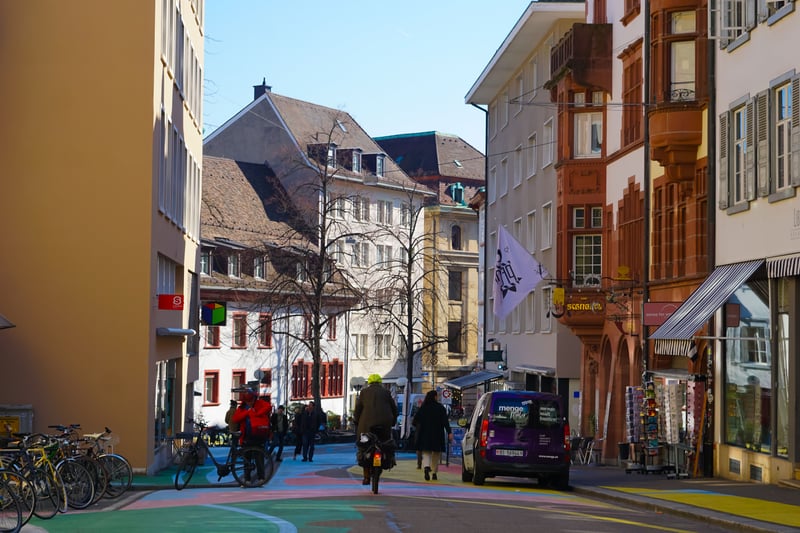
The everyday basket is high but manageable. On Numbeo figures as of October 2026, a litre of milk is CHF 1.82, a 500g loaf of white bread CHF 3.04, a dozen eggs CHF 6.28 and a kilo of chicken fillet CHF 23.20. An inexpensive-restaurant meal is CHF 25, a monthly public-transport pass CHF 82.50, basic utilities for an 85 square-metre flat CHF 230, and a litre of petrol CHF 1.89.
Groceries: the Migros and Coop duopoly vs discounters
The two big retailers, Migros and Coop, dominate, but the discounters Aldi, Lidl and Denner are a real budget lever and can cut a grocery bill noticeably. Residents near a border also shop across into Germany, France or Italy for staples, a saving aggregator pages rarely mention.
Getting around: public transport and the travelcard system
The SBB network is dense and punctual, which is why many residents do not own a car. A monthly local pass costs CHF 82.50 on Numbeo's national average, a half-fare (Halbtax) card halves most ticket prices for an annual fee, and a national GA travelcard gives unlimited travel for a higher annual fee. The quality of the network is part of what you are paying for.
Utilities and other fixed monthly costs
Basic utilities, heating, electricity, water and refuse for an 85 square-metre flat cost CHF 230 a month on Numbeo's figures, with phone, internet and a TV/radio licence on top. These fixed lines round out the household budget alongside rent and insurance.
By city and canton
Cost of living by city and canton
The same country produces very different total costs depending on where you live. Zurich and Geneva are the expensive end; Basel, Bern, Lausanne, Lucerne and Lugano sit in a mid band; and rural cantons and Ticino are cheaper overall. Resort towns such as Zermatt, Grindelwald and Montreux skew high on rent and eating out because of tourism. Because tax, rent and insurance all vary by canton, your choice of canton moves the budget more than any other single decision.
The expensive end: Zurich and Geneva
On Numbeo figures as of October 2026, a one-bed city-centre flat is CHF 2,467 in Zurich and CHF 2,321 in Geneva, the two priciest Swiss cities. Both also carry high everyday and eating-out costs, though Geneva's higher cantonal tax partly offsets its salaries.
The mid band: Basel, Bern, Lausanne, Lucerne, Lugano
Bern is markedly cheaper than Zurich or Geneva, with a one-bed centre flat at CHF 1,551 on Numbeo data, and Basel is at CHF 1,643. Lausanne, at CHF 1,882, and Lucerne sit in this mid band too, offering much of the Swiss quality of life at a lower rent line than the two leaders.
Resort and rural: Zermatt, Grindelwald, Montreux, Ticino
Alpine resort towns such as Zermatt and Grindelwald, and lakeside Montreux, carry a tourism premium on rent and dining that can outstrip the big cities for those specific lines. Rural cantons and Ticino, by contrast, are generally the cheapest places to live overall.
Why so expensive
Why Switzerland is so expensive
Why is the cost of living so high in Switzerland? It is structural, not accidental. A high wage floor feeds into the price of every service, from a haircut to a restaurant meal. The domestic market is small with limited price competition, a large share of food is imported and protected by tariffs, and quality, infrastructure and labour standards are high and baked into prices. Mandatory per-person health insurance adds a large fixed cost on top.
The wage floor and the strong franc
The two structural drivers are wages and the currency. High pay across the economy raises the cost of anything labour-intensive. The Swiss franc is a strong safe-haven currency managed by the SNB, which makes Swiss prices look even higher when converted into US dollars or pounds and raises the cost of imports. Much of the "Switzerland is shockingly expensive" reaction abroad is partly a currency effect.
A small, protected market with high standards
Switzerland is a small market that relies on imports for a large share of its food, with protective tariffs limiting cheap competition. Combine that with high quality and infrastructure standards and a population willing to pay for them, and prices settle well above neighbouring countries. These are qualitative drivers; the precise import share varies by category.
Vs the UK
Switzerland vs the UK
The most-searched comparison is the cost of living in Switzerland vs the UK, and the honest version has nuance. On Numbeo's comparison as of October 2026, living costs excluding rent are 56 percent higher in Switzerland than in the UK, restaurants 45 percent higher and groceries 63 percent higher. But local purchasing power is also 36 percent higher in Switzerland, so the comparison cannot be read on prices alone.
Where Switzerland costs more (and by how much)
Across most everyday baskets Switzerland is dearer than the UK: groceries, restaurants and general consumer goods all carry a premium of 45 percent or more on Numbeo's data. Eating out in particular is markedly more expensive, with a three-course meal for two at a mid-range restaurant at CHF 120 in Zurich against CHF 88 in London.
Where Switzerland is not actually worse than London
The credibility point most pages miss is that against London specifically, the gap narrows sharply on some lines. A one-bed in central Zurich at CHF 2,467 is only 4 percent above central London at CHF 2,362, and a monthly transit pass in Zurich at CHF 88 costs less than half of London's CHF 204. So "more expensive than the UK" is true on average but not on every line, and the purchasing-power direction depends on salary.
Salary offset
Do the high salaries cancel out the high costs?
This is the real decision question. The 2024 gross median wage, standardised to full time, was CHF 7,024 a month according to the BFS, up from CHF 6,788 in 2022. There is no national statutory minimum wage, though some cantons set their own, as covered in our minimum wage guide. Net take-home pay is high, mandatory employee social deductions are comparatively modest, and disposable income after the bills is often greater than in lower-cost European countries, especially in a low-tax canton.
The median wage and what "good salary" means
A useful anchor for "what is a good salary in Switzerland" is that CHF 7,024 gross median. What counts as comfortable depends on household size, canton and rent after insurance is deducted. A single professional on the median in a mid-band canton lives comfortably; the same salary stretches less in central Zurich or Geneva.
Can you live on 5,000 CHF a month?
Can you live on 5,000 CHF a month in Switzerland? It is tight for a single person in central Zurich or Geneva once a one-bed rent of CHF 2,300 to CHF 2,500 and the monthly health-insurance premium are deducted, leaving a modest balance for everything else. In a cheaper city such as Bern or Lugano, with a central one-bed at CHF 1,400 to CHF 1,550, the same CHF 5,000 is workable. The honest answer is canton-dependent.
Low VAT and low inflation soften the picture
Two things cut against the expensive reputation. The standard VAT rate is just 8.1 percent, low by European standards, so the tax component of consumer prices is smaller than in most of the EU. And 2025 inflation was 0.2 percent on BFS figures, so prices are stable rather than spiralling. Both support purchasing power once you are earning in francs.
Your relocation
Cost of living and your relocation decision
Cost of living is one input into a larger move that also covers permits, registration, banking and housing. Our relocating to Switzerland guide sets out the full sequence, and the companion average Swiss salary guide powers the net-income side of the maths. Run your rent and tax comparison early, because those two lines dominate the budget.
How canton choice changes your total cost
Tax, insurance and rent all move together by canton, so the location decision is really a total-cost decision. A low-tax base such as Zug can leave you materially better off than a higher-tax canton on the same gross salary, which is why so many international firms and individuals settle there. Compare cities after cantonal tax, not on gross pay, and see our personal income tax by canton guide for how the brackets work.
The relocation sequence: permit, residence, banking
Budgeting connects directly to the practical move. The work permit step decides whether you can be hired and on what basis, residence registration follows, and you will need to open a Swiss bank account to pay rent and receive salary. For founders moving a business as well as a household, the canton decision ties the personal and corporate sides together. Get the location right and Switzerland is expensive on paper but comfortable in practice. We work on a custom-quote basis, so tell us the canton and household and we will scope the move.
FAQ
Frequently asked questions
How much does it cost to live in Switzerland per month?
A single person spends CHF 1,378 per month excluding rent and a family of four CHF 5,057 excluding rent, according to Numbeo data as of October 2026. Rent is added on top.
What is the average rent in Switzerland?
A one-bedroom city-centre flat averages CHF 1,646 per month nationally and CHF 1,333 outside the centre, rising to CHF 2,467 in central Zurich and CHF 2,321 in central Geneva, based on Numbeo figures as of October 2026.
Is health insurance mandatory in Switzerland and how much is it?
Yes. KVG or LAMal basic health insurance is compulsory within three months of arrival and priced per person. Premiums vary by canton, age group and deductible; for 2026 the mean premium rose by 4.3 percent, per the Federal Office of Public Health.
Why is Switzerland so expensive?
High wages feed into service prices, the strong safe-haven franc raises the foreign-currency view and import costs, the domestic market is small with limited price competition, food is protected, quality standards are high, and per-person health insurance is a large fixed cost.
Is Switzerland more expensive than the UK?
Living costs excluding rent are 56 percent higher than in the UK according to Numbeo as of October 2026, but local purchasing power is also 36 percent higher. Against London, central Zurich rent is only 4 percent higher and a monthly transit pass costs less than half, while eating out is dearer.
What is the cheapest city to live in Switzerland?
Bern and the canton of Ticino tend to be cheaper, while Zurich and Geneva are the most expensive. Rural cantons generally cost less overall.
How much does it cost to live in Zurich per month?
Zurich is the most expensive Swiss city. A one-bedroom city-centre flat is CHF 2,467 per month and a single person spends CHF 1,554 a month excluding rent, per Numbeo data as of October 2026.
What is a good salary to live comfortably in Switzerland?
A useful anchor is the 2024 gross median full-time wage of CHF 7,024 reported by the Federal Statistical Office. What counts as comfortable depends on household size, canton, and rent once health insurance is deducted.
Can you live on 5,000 CHF a month in Switzerland?
It is tight for a single person in Zurich or Geneva once rent and insurance are deducted, but workable in cheaper cantons.
How much do groceries and transport cost in Switzerland?
An inexpensive-restaurant meal is CHF 25, a monthly public-transport pass CHF 82.50, and basic utilities for an 85 square-metre flat CHF 230, based on Numbeo figures as of October 2026.
Does Switzerland have a minimum wage?
There is no national statutory minimum wage in Switzerland, although some cantons set their own.
How much is the cost of living for international students in Switzerland?
University welcome-center budgets estimate student living costs, with rent and health insurance the dominant lines; student insurance options can reduce the premium.
Keep reading
Related guides and services.
Turn this into a Swiss plan that works.
A 30-minute call to map your structure, canton, timeline and required substance. No price-list. Every engagement is scoped on the call.